Reading through Josh Tyrangiel's 1999 article, I noticed that the issues and corporations he discusses have similarities or have been completely turned on their head in comparison to today's MTV, music, hip hop culture saturated mainstream.
In his third paragraph he discusses how musicians like The Who, The Beatles and The Kinks used film as promotional videos for their upcoming albums or singles, considering he's discussing hip hop, i immediately thought of the likes of Eminem, Outkast and 50Cent who have also made films with their music. Whether their music was made for the film or the film was made for their music is uncertain but 8 Mile, Idlewild and Get Rich or Die Tryin' all had artist focused soundtracks.
Tyrigien says that in 1983 The New York Times noted of MTV that 'The program can be watched for hours at a time without detecting the presence of a single black performer'. Today that is far from the hip hop saturated programming, one could assume that almost every second music video seems to be hip hop.
On music channels today shows similar to Video Soul or Night tracks soley focused on hip hop are very much present, DJ Severe hosts one on C4 and MTV has a two hour Hip Hop Countdown played frequently during the week. This isn't to say that it has as noticible impact as Video Tracks might have been as that was a black program against a dominantly white rock music video world and the Hip hop countdown today just seems like almost ordinary MTV programming. Well at least a year or two it may have, however the 'emo' culture that is entering the once purely hip hop dominated music television is evening up the previously black music stratosphere.
Tyrigien also states how Michael Jackson would be MTV's signature act for almost a decade and his arrival cracked MTV open to R & B. I thought this was quite ironic as he discusses how Run D.M.C only got airplay and result from jamming with white rockers, maybe Jackson got his airtime cause he was a black man fading into white, therefore easing R&B into slots.
I thought it was also pretty uncanny that the use of white people to sell and infiltrate hip hop into the music video stratosphere was the way to go. In 2005 Hip hop was everywhere written on every wall and you felt it most at the 2005 MTV awards where almost 80 percent of the show was hip hop and RnB performance orientated and awards were dominated by those artists. Tyrigien says of the Aerosmith and Run D.M.C collaboration that 'The irresistability of the metaphor no doubt helped make the song a crossover hit'. After the notable hip hop domination what was once being done to help hip hop artists was being done to sell white rock today. This is evident in the music video of famous white rockers Korn and their song Twisted Transistor where the use of famous rappers such as Snoop Dogg, Lil John' and David Banner replacing the Korn artists, is selling their rock to the heavy hip hop dominated music culture. And also the presence of hip hop players in clips like that of artists such as fallout boy.
http://www.youtube.com/watch?v=b40HQve1F-E
Reading about 'The Box', reminded me of C4's Select live and ALT TV. The article says that you could ring up and get the video you wanted played on 'The Box', this action also referenced as Jackin' The Box, and then you'd get an added bill on your telephone statement. On C4 and Alt Tv it is very similar but up to date with the frequent and common use of cellular phones as payers, and with cellphones available to children, you can cut out the parental ask your billpayer first. The cancellation of The Box makes me wonder what might happen to all of NZ's Music channels.
Also mentioned in the article is that Hip hop videos were better than videos from other genres as they deliver personality. I believe this isn't so anymore as there are so many replica performers in hip hop that the personality is novel, the culture is commercial and hip hop spreads into so many genres these days that its hard to sepreate it. I think that to have personaltiy in a hip hop video you'd have to guide the video away from the once groundbreaking label advertising which is extremely prevalent with adidas, nike air force ones, cars, clothes, fast food etc. It would also have to steer away from the video hoes and materialistic pretentious flashing of assets and women, and completely make it something other than todays storybook hip hop video, something that had personality like original artists such as Run D.M.C and Puff Daddy made their own.
Sunday, May 20, 2007
commercialization and association
I was never attracted to the genre of Hip Hop. This was mainly because i did not like the way women were portrayed in the top 40 'commercial' Hip Hop videos I viewed on music television. Artists such as Snoop Dogg, 50 Cent, 2PAC, etc generally would have scadly clothed women dancing around them wearing next to nothing shaking their booty doing everything they can to satisfy the allmighty gangsters. I however have a younger brother whom is a Hip Hop finatic and introduced me to the 'authentic' side of Hip Hop. Most people today whom are exposed to Hip Hop on the likes of Juice TV, CV, etc only view the sensationalized masuline model which majority of video clips are based on. These images of wealth, 'bling', cars, drugs, gangs, guns and the staple booty shaker become societies model of what Hip Hop is.
 Snoop Dogg and Pharrell Williams released a song called "Drop it like its hot" (2004) which minimalisticly yet powerfully encompasses these themes. "The expression is basically a call for a female to perform a suggestive dance (usually directly in front of or with a male) that involves shaking her lower body until it touches or nearly touches the floor." (Wikipedia). In the video women shake their booty in response to Snoop Dogg's lyrics along with images of marijuana, cars, pimping, etc. Songs like this that are actually themed on tropes of the 'commercial' gangster rapper culture, deepen their overall associations with the Hip Hop genre and its ideals. Music video's are often the first and sometimes only times that we are able to see songs gaining visual definitions and/or affirmations. Music videos have the power to not only give a song life, but instill visual representations, whether they be positive or negative, within our minds. With the abundance of 'commercial' representations of Hip Hop being put on mainstream television, it is easy to see that society's views on Hip Hop ideals and history is derived from the Gangster Lifestyle.
(Wikipedia - http://en.wikipedia.org/wiki/Drop_It_Like_It's_Hot)
Here is the video link for "Drop it like its Hot" http://www.youtube.com/watch?v=VFC_L8iOSzY
 Snoop Dogg and Pharrell Williams released a song called "Drop it like its hot" (2004) which minimalisticly yet powerfully encompasses these themes. "The expression is basically a call for a female to perform a suggestive dance (usually directly in front of or with a male) that involves shaking her lower body until it touches or nearly touches the floor." (Wikipedia). In the video women shake their booty in response to Snoop Dogg's lyrics along with images of marijuana, cars, pimping, etc. Songs like this that are actually themed on tropes of the 'commercial' gangster rapper culture, deepen their overall associations with the Hip Hop genre and its ideals. Music video's are often the first and sometimes only times that we are able to see songs gaining visual definitions and/or affirmations. Music videos have the power to not only give a song life, but instill visual representations, whether they be positive or negative, within our minds. With the abundance of 'commercial' representations of Hip Hop being put on mainstream television, it is easy to see that society's views on Hip Hop ideals and history is derived from the Gangster Lifestyle.
(Wikipedia - http://en.wikipedia.org/wiki/Drop_It_Like_It's_Hot)
Here is the video link for "Drop it like its Hot" http://www.youtube.com/watch?v=VFC_L8iOSzY

hiphop dance movies
I believe that movies like Stomp the Yard, You Got Served, Step Up and Take the Lead have had a positive influence over many of our young teens and young adults in today’s society. Break dancing and Krumping have become widely recognized and have become like a good case of the flu. Everyone is getting hooked and they love it. The energy that is evident in the dancers from the movies, their passion for it and just because its fun is positively spreading amongst our young teens who are becoming motivated to master the art of Krumping and Break Dancing. Of course to be able to master such routines one has to be fit and healthy so a lot of teenagers have stoped smoking, taking drugs and alcohol and there has been less violence with them taking their fights out to the streets with each other on the dancing battle field. This usually involves two opposing teams showing off their own original creative dancing skills and either playing for money or reputation. The dancers take pride in their performances and really take it serious. To lose to then is like losing a physical fight. It is all about reputation – which has the most and better dance moves. Dancing is not the only factor in these movies that have influence over our teenagers in today society but the themes that are evident play a huge part. Friendship, love and family are factors that have been played out in all of the movies mentioned. They show our society that it is alright if one has done wrong because it is only natural that people make mistakes as long as you own up to them and correct them. For example in Stomp the Yard, the character played by Columbus Short has a hidden secret that if known could jeopardize his stay at college which it does but he owns up to it and works hard to make things right. Family can be made up of who ever one feels close to and safe. A lot of teenagers today come from abusive backgrounds and find comfort in those who they can relate to. These movies emphasise that it is okay to create your own family click that you can feel apart of and safe.
just a lil clip from You Got Served..
http://www.youtube.com/watch?v=svsLt5QcuQY&mode=related&search=
just a lil clip from You Got Served..
http://www.youtube.com/watch?v=svsLt5QcuQY&mode=related&search=
Graffitti as a notion of identity
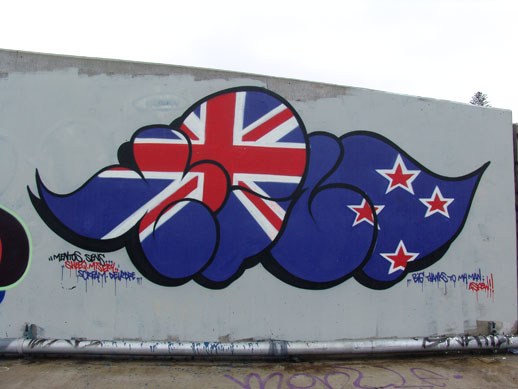
I believe that graffiti art that was shown in the lecture in terms of pink lady is legitimate graffiti and this is not destruction of property as seen by the majority of the public on the subject of graffiti. In terms of it’s origins in New York City being an identifier of territory similar to that of a dog defecating a pole to signal the boundaries of their territory is extremely animal like. This has evolved to the art of graffiti due to the sparse space available for graffiti artists to put their mark on the world. The evolution of graffiti has taken a turn for the worse I believe, in terms of society wanting to rid the world of graffiti artists or taggers. I think that the better solution would be to allow and encourage genuine graffiti artists to paint their art works on walls in public areas, this would allow vandals whom some graffiti artists start out as to both vent their frustrations on the world and also to channel their frustrations on the world in a positive and constructive manner. In this final point I believe schools in poor metropolitan areas around the world should encourage this form of art instead of ridiculing the perpetrators. This both gives the graffiti artists a view on the world that they are both valued and that they can break the mould.

Great Expectations – The Dangers of the Music Video
I found a very interesting article ‘Video in the Machine: The Incorporation of Music Video into the Recording Industry’ by theorist Jack Banks which raises an important issue with Music Videos.
Before MTV, record labels funded tours for their new artists in order to attract a following. The 1970’s in particular, artists were required by record companies to tour for the release of a new album. However come the 1980’s record companies (mostly the major labels) stopped subsidizing artists tours and looked at other means for maximizing CD sales. The combination of rising tour costs and small crowds meant there profits were crippled. Thus the major labels looked at Music Video as the way to promote artists over touring.
What is important to note is that music videos did not kill concerts, fans always want to go see their favourite bands play live. It did however shape how the performances took place. For instance music John Banks discusses pop stars which use choreography, imagery and special effects in making their music videos. What this does however is make an expectation for the fan as to what the artists live performance is like. This pressure to perform often means artists attempt to replicate their performance in their music video, often making it seem ‘pre-planned’ taking away the spontaneity of a live show.
A recent well known example that comes to mind is rock band Fall Out Boy. This band sold out an Auckland show at the Saint James with out ever playing in New Zealand. Music video was used to establish their perceived live show, to portray their image and their authenticity. Thus fans felt they already knew what they were like without ever actually seeing them.
I guess the point I am trying to raise is that; while music videos undoubtedly provide great exposure from a band’s point of view, it can take away the magic of the spontaneous live show which used to be more prevalent pre MTV. The pressures created to live up to the perceived performance in music video means shows often comes across as pre-planned moving the emphasis away from the music itself.
Before MTV, record labels funded tours for their new artists in order to attract a following. The 1970’s in particular, artists were required by record companies to tour for the release of a new album. However come the 1980’s record companies (mostly the major labels) stopped subsidizing artists tours and looked at other means for maximizing CD sales. The combination of rising tour costs and small crowds meant there profits were crippled. Thus the major labels looked at Music Video as the way to promote artists over touring.
What is important to note is that music videos did not kill concerts, fans always want to go see their favourite bands play live. It did however shape how the performances took place. For instance music John Banks discusses pop stars which use choreography, imagery and special effects in making their music videos. What this does however is make an expectation for the fan as to what the artists live performance is like. This pressure to perform often means artists attempt to replicate their performance in their music video, often making it seem ‘pre-planned’ taking away the spontaneity of a live show.
A recent well known example that comes to mind is rock band Fall Out Boy. This band sold out an Auckland show at the Saint James with out ever playing in New Zealand. Music video was used to establish their perceived live show, to portray their image and their authenticity. Thus fans felt they already knew what they were like without ever actually seeing them.
I guess the point I am trying to raise is that; while music videos undoubtedly provide great exposure from a band’s point of view, it can take away the magic of the spontaneous live show which used to be more prevalent pre MTV. The pressures created to live up to the perceived performance in music video means shows often comes across as pre-planned moving the emphasis away from the music itself.
Great Expectations – The Dangers of the Music Video
I found a very interesting article ‘Video in the Machine: The Incorporation of Music Video into the Recording Industry’ by theorist Jack Banks which raises an important issue with Music Videos.
Before MTV, record labels funded tours for their new artists in order to attract a following. The 1970’s in particular, artists were required by record companies to tour for the release of a new album. However come the 1980’s record companies (mostly the major labels) stopped subsidizing artists tours and looked at other means for maximizing CD sales. The combination of rising tour costs and small crowds meant there profits were crippled. Thus the major labels looked at Music Video as the way to promote artists over touring.
What is important to note is that music videos did not kill concerts, fans always want to go see their favourite bands play live. It did however shape how the performances took place. For instance music John Banks discusses pop stars which use choreography, imagery and special effects in making their music videos. What this does however is make an expectation for the fan as to what the artists live performance is like. This pressure to perform often means artists attempt to replicate their performance in their music video, often making it seem ‘pre-planned’ taking away the spontaneity of a live show.
A recent well known example that comes to mind is rock band Fall Out Boy. This band sold out an Auckland show at the Saint James with out ever playing in New Zealand. Music video was used to establish their perceived live show, to portray their image and their authenticity. Thus fans felt they already knew what they were like without ever actually seeing them.
I guess the point I am trying to raise is that; while music videos undoubtedly provide great exposure from a band’s point of view, it can take away the magic of the spontaneous live show which used to be more prevalent pre MTV. The pressures created to live up to the perceived performance in music video means shows often comes across as pre-planned moving the emphasis away from the music itself.
Before MTV, record labels funded tours for their new artists in order to attract a following. The 1970’s in particular, artists were required by record companies to tour for the release of a new album. However come the 1980’s record companies (mostly the major labels) stopped subsidizing artists tours and looked at other means for maximizing CD sales. The combination of rising tour costs and small crowds meant there profits were crippled. Thus the major labels looked at Music Video as the way to promote artists over touring.
What is important to note is that music videos did not kill concerts, fans always want to go see their favourite bands play live. It did however shape how the performances took place. For instance music John Banks discusses pop stars which use choreography, imagery and special effects in making their music videos. What this does however is make an expectation for the fan as to what the artists live performance is like. This pressure to perform often means artists attempt to replicate their performance in their music video, often making it seem ‘pre-planned’ taking away the spontaneity of a live show.
A recent well known example that comes to mind is rock band Fall Out Boy. This band sold out an Auckland show at the Saint James with out ever playing in New Zealand. Music video was used to establish their perceived live show, to portray their image and their authenticity. Thus fans felt they already knew what they were like without ever actually seeing them.
I guess the point I am trying to raise is that; while music videos undoubtedly provide great exposure from a band’s point of view, it can take away the magic of the spontaneous live show which used to be more prevalent pre MTV. The pressures created to live up to the perceived performance in music video means shows often comes across as pre-planned moving the emphasis away from the music itself.
Hip Hop Nostalgia? Really?
Upon reading the blogs so far on Hip Hop, I noticed a common thematic that suggests contemporary hip hop culture is commercialized, commodified and artificial, whereas there is a certain nostalgia for the original "roots" of hip hop. I would like to point out some superficialities of such an argument.
Firstly, Hip Hop began as a minority subculture, rejecting mainstream "white middle-class America." It was tainted with issues of struggles, depression, and poverty. This is clearly portrayed in the music, which simultaneously represented and spoke to the culture it was born out of. I fail to see how it is any different today. Contemporary Hip Hop is made for and by the materialistic, capitalistic culture we live in today. One only has to look at the ridiculous number of product placements in music videos, movies, and advertisements for evidence of this (e.g. cellphones, ipods, coca-cola).
Secondly, it has been argued that Hip Hop has become mainstream (and thus less legitimate)since it was adopted by "white" culture. I fail to see how this is a negative consequence. The artists are no longer struggling for an adequate lifestyle, the capitalists are content (and thus under control) due to the constant inflow of profits, and the audience gets what it wants. There is no evidence that the music has been impacted as a result of this either! Albeit, there are some talentless, completely manufactured Hip Hop symbols (e.g. Snoop Dog), but there is also a constant developing, improving process attaching itself to the Hip Hop genre. Just because we are presented with artificial icons, does not mean that is all there is out there!!
Firstly, Hip Hop began as a minority subculture, rejecting mainstream "white middle-class America." It was tainted with issues of struggles, depression, and poverty. This is clearly portrayed in the music, which simultaneously represented and spoke to the culture it was born out of. I fail to see how it is any different today. Contemporary Hip Hop is made for and by the materialistic, capitalistic culture we live in today. One only has to look at the ridiculous number of product placements in music videos, movies, and advertisements for evidence of this (e.g. cellphones, ipods, coca-cola).
Secondly, it has been argued that Hip Hop has become mainstream (and thus less legitimate)since it was adopted by "white" culture. I fail to see how this is a negative consequence. The artists are no longer struggling for an adequate lifestyle, the capitalists are content (and thus under control) due to the constant inflow of profits, and the audience gets what it wants. There is no evidence that the music has been impacted as a result of this either! Albeit, there are some talentless, completely manufactured Hip Hop symbols (e.g. Snoop Dog), but there is also a constant developing, improving process attaching itself to the Hip Hop genre. Just because we are presented with artificial icons, does not mean that is all there is out there!!
Scared of Rap?
While I was doing research for my essay, I came across many interesting articles about the the perception of rap clture. As rap rose in reaction to the social and economic situations of many African Americans, especially in New York, it became a genre that black people could relate and identify with, addressing issues of racism, poverty and crime that were evident within black communities.
 Because of controversial lyrical content and associated imagery relating to gangs, street crime, racism and anti-authority messages (to name just a few), rap expression faced negative criticism by critics and political leaders, who condemned the genre for encouraging violence and crime amongst young black people. Such criticism reinforced public fears about rap culture, even racial stereotyping of black people as criminals. On the other hand, explicit rap lyrics and images of gangs and violence did not help deter this stereotype. But the more rap was condemned, the more anti-white and anti-authority messages became dominant in rap.
It is ironic that a form of expression that was created to deal with the racial and social problems led to further reinforcement of “white” fears that Black people were problematic in society. However, the social situation of Black people in America was a result of a long, disadvantaged history and loss of identity within a culture. It seems as though this was a no-win cycle.
 However, racial and political content is now less common and artists are more likely to use “girls, cars and bling” to sell their products. Is this because rap now has a wider “white” following than it did twenty years ago? Or is it because rap artists have learnt through past struggles to gain airplay, that particular controversial content will make it harder to gain public acceptance? Perhaps the emergence of girls, cars and bling is simply a new statement about the rise and success of black artists in the new millennium.
 Because of controversial lyrical content and associated imagery relating to gangs, street crime, racism and anti-authority messages (to name just a few), rap expression faced negative criticism by critics and political leaders, who condemned the genre for encouraging violence and crime amongst young black people. Such criticism reinforced public fears about rap culture, even racial stereotyping of black people as criminals. On the other hand, explicit rap lyrics and images of gangs and violence did not help deter this stereotype. But the more rap was condemned, the more anti-white and anti-authority messages became dominant in rap.
 It is ironic that a form of expression that was created to deal with the racial and social problems led to further reinforcement of “white” fears that Black people were problematic in society. However, the social situation of Black people in America was a result of a long, disadvantaged history and loss of identity within a culture. It seems as though this was a no-win cycle.
 However, racial and political content is now less common and artists are more likely to use “girls, cars and bling” to sell their products. Is this because rap now has a wider “white” following than it did twenty years ago? Or is it because rap artists have learnt through past struggles to gain airplay, that particular controversial content will make it harder to gain public acceptance? Perhaps the emergence of girls, cars and bling is simply a new statement about the rise and success of black artists in the new millennium.
Saturday, May 19, 2007
Internet music advertisement
There are many arguments about the mp3 downloading. About the 10 years ago, we were listened the music from the radio, and watched singers’ music videos on TV. Many people enjoyed to buy and collect the CDs and cassette tapes of their favorite musicians. I also enjoyed purchasing CDs of my favorite singers or bands when I was a high school girl, and remember that I was very happy to look at CD case, CD jacket and pictures. And put the posters on the wall in my room.
However, an increase use of computer, internet and its developments, people can easily get downloaded music, films and music videos through online. They also could see the album posters and pictures of singers from internet. I also stopped purchasing CDs, and start to download songs from internet or friends. Of course these songs and music videos are all free to listen and watch. People should not need to pay for music.
But these caused the big problem of song writer’s infringement of copyright. Therefore singers and the music companies are starting to advertise the album through online such as ‘Amazon.com’ to attract online users to buy it. Thus, internet caused some issues of downloading music but also it became another medium to advertise the music more convenience to netizen, and people could easily purchase the albums on line. Internet gives huge influences to people. As a place of advertisement and file sharing, it can help to people to buy the album, or it can make to stop buying the album.
Television Theme Music and Nostalgia
I have been thinking about how hearing a specific song can evoke memories and create a sense of nostalgia. I began thinking about this the other day when I heard the original theme song for Sesame Street. It brought me right back to when I was little girl glued to the television screen every morning for my daily dose of puppetry and finding out which letter and number the show was brought to me by. I think it is relevant in terms of this paper and can think of plenty of shows and their distinctive choice of theme song. For me some highlights are Seinfeld’s unique little ditty as well as the theme song for Full House, in particular the drum beats at the beginning. It is fair to say that the song choice or particular sound, such as the sound of clicking fingers at the beginning of the Adams Family, is a distinctive characteristic of an individual show. When they finally stop playing reruns of Friends, and give us time to miss it, I will no doubt reminisce about the show that encapsulated my high school years when I hear the Rembrandts’ ‘I’ll Be There for You’. It would be interesting to find out what other television theme songs stand out in people’s minds.
Commercialising hiphop
After reading week 10’s reading material, Hiphop turns 30: Whatcha celebratin’ for?, I totally agree that hiphop have begun as a folk culture in Brooklyn and the South Bronx but now became the American entertainment-industry sideshow. Hiphop used to be simply defined as its isolation from mainstream society where it has now became all kinds of people’s notion of entertainment, style, fashion, and politics. Hiphop is now globalized, unified culture that is popular in any global marketplace.
Closely examining current issue and representation of hiphop in films and agreeing with what Nabeel said during the lecture, I believe that the hiphop culture has been commercialized in some way through its fashion, activity, and dance. The fashion icon of hiphop; from caps to sneakers is not only the typical image of hiphop style but also became consumable goods that global teens fancy. Greg Tate (2005) stated in his article that ‘hiphop floats through the virtual marketplace of branded icons as another consumable ghost’.
Because of this trend, films and music video sometimes emphasize too much on commercializing hiphop culture. For example, the only film I can remember right now is You got served (2004). The film has been criticized for its terrible script and unrealistic act from actors. This film only draws great emphasis on break-dance, b-boy team, fashion, music, and basketball. It represents typical hiphop culture. Their representation of hiphop fashion is well drawn through different aspects of characters. Its uses of real hiphop singers as their main actors also tell us how themselves and their own music have been commercialized. It also does not seem to have strong plotlines or memorable scene accept dance scenes. However, teenage audiences seem to enjoy this film since it has several eye-catching scenes of break dance especially at the end of the film: where they have the last battle.
Closely examining current issue and representation of hiphop in films and agreeing with what Nabeel said during the lecture, I believe that the hiphop culture has been commercialized in some way through its fashion, activity, and dance. The fashion icon of hiphop; from caps to sneakers is not only the typical image of hiphop style but also became consumable goods that global teens fancy. Greg Tate (2005) stated in his article that ‘hiphop floats through the virtual marketplace of branded icons as another consumable ghost’.
Because of this trend, films and music video sometimes emphasize too much on commercializing hiphop culture. For example, the only film I can remember right now is You got served (2004). The film has been criticized for its terrible script and unrealistic act from actors. This film only draws great emphasis on break-dance, b-boy team, fashion, music, and basketball. It represents typical hiphop culture. Their representation of hiphop fashion is well drawn through different aspects of characters. Its uses of real hiphop singers as their main actors also tell us how themselves and their own music have been commercialized. It also does not seem to have strong plotlines or memorable scene accept dance scenes. However, teenage audiences seem to enjoy this film since it has several eye-catching scenes of break dance especially at the end of the film: where they have the last battle.
Status Quo, according to who?
In light of the punk and hip hop lectures, as a person who is neither “African American”, nor “white”, I could identify with the hip hop culture more as a person of color, because hip hop empowered and inspired many people in an artistic sense for black people or “ethnic” people all over the world. I felt like I belonged to a cultural movement just because I was born a different color than white. On the other hand I also find punk quite empowering in its art and symbolism; however the music never appealed to me, never made me feel good, or inspired. It seemed to be quite pessimistic and angry in a revolutionary sense. It seems to me that hip hop and punk, from the start tried to get away from stereotypes and the status quo, but in chasing away these norms, they were painted into a corner, where even their own genre became a norm with its own status quo. It is interesting to see the two genres pigeonholed in two opposite corners. Hip hop is going the opposite direction of punk now, where hip hop is painted as very commercialized with a rich black man image and punk is restrained to a white angry male image.
Ice. Ice. Baby.
Building on Sarahlou's post about changes in hip hop from "representing the struggle" to consumerism, I wanted to talk about something which puzzles me.
Bling.
There appears to be a general aknowledgement of the correlation between hip hop and bling (sparkling jewellery). I'm not exactly sure what bling is supposed to be. It seems you can buy huge sparkling things from $2 shops and places like Supre pretty cheaply (in comparason to real diamonds).
Here's the thing though. This doesn't appear to be the same stuff that is flaunted in hip hop videos and in rap lyrics. It seems inconsistant for rappers to rhyme about fancy cars and expensive champagne then cheap jewellery.
However, if the bling is infact real, then it could be possible that rappers are promoting the diamond industry. An industry which has a long history of human rights abuses against Africans.
So rappers want rights for African Americans and want to make their stories known, but at the same time they are brandashing the produces of an industry that insults their racial origins.
If they (rappers) knew about this, surely they would dissaprove.
What's with that?
Bling.
There appears to be a general aknowledgement of the correlation between hip hop and bling (sparkling jewellery). I'm not exactly sure what bling is supposed to be. It seems you can buy huge sparkling things from $2 shops and places like Supre pretty cheaply (in comparason to real diamonds).
Here's the thing though. This doesn't appear to be the same stuff that is flaunted in hip hop videos and in rap lyrics. It seems inconsistant for rappers to rhyme about fancy cars and expensive champagne then cheap jewellery.
However, if the bling is infact real, then it could be possible that rappers are promoting the diamond industry. An industry which has a long history of human rights abuses against Africans.
So rappers want rights for African Americans and want to make their stories known, but at the same time they are brandashing the produces of an industry that insults their racial origins.
If they (rappers) knew about this, surely they would dissaprove.
What's with that?
Advertising, Music and Nationalism.
I think the ideas about the use of popular music in advertising brought up by ‘DisplacedPixil’ in an earlier post (14/05/07) are really interesting. I agree that at times the advertisement itself can act as a promotional tool for the music/artist. And also with comments relating to how sometimes as a result of this, the actual product is placed in a subservient position to the music although that may not necessarily be the intention. The Regina Spektor song mentioned, for example is quite a fitting example of this process.
This way of using music in advertising, also made me think of the way NZ music is used in advertising. The new TV One promo using Evermore’s ‘Light Surrounding You’, in particular.
(Couldn't find the shorter version, sorry!)
The most noticeable thing for me is the way advertising in this country really likes to play on our emotions of nationalism, and solidarity as a nation. Advertisers sure know we’re a bunch of suckers for anything that makes us feel proud and cohesive as a nation! In this ad, the message is about all New Zealanders joining together, as ‘one people’, ‘one country’, and ultimately all of this being achieved through ‘one channel’. The promo features a combination of prominent TV One presenters/personalities and ‘ordinary’ New Zealanders, all uniting together because ‘We Are ONE’. And what better way is there to portray this than using music from NZ’s own boys from Fielding who have done us proud as a nation by ‘making it big’ overseas! (Not to forget though, that this is a promo for TV One!)
The ad seems a little idealistic, but all in all, I do like it myself. I think it’s pretty effective – it taps into our sense of ‘nationhood’, and makes us feel as though we really are ‘one nation’ despite the things that separate us.
~ Shalinie ~
This way of using music in advertising, also made me think of the way NZ music is used in advertising. The new TV One promo using Evermore’s ‘Light Surrounding You’, in particular.
(Couldn't find the shorter version, sorry!)
The most noticeable thing for me is the way advertising in this country really likes to play on our emotions of nationalism, and solidarity as a nation. Advertisers sure know we’re a bunch of suckers for anything that makes us feel proud and cohesive as a nation! In this ad, the message is about all New Zealanders joining together, as ‘one people’, ‘one country’, and ultimately all of this being achieved through ‘one channel’. The promo features a combination of prominent TV One presenters/personalities and ‘ordinary’ New Zealanders, all uniting together because ‘We Are ONE’. And what better way is there to portray this than using music from NZ’s own boys from Fielding who have done us proud as a nation by ‘making it big’ overseas! (Not to forget though, that this is a promo for TV One!)
The ad seems a little idealistic, but all in all, I do like it myself. I think it’s pretty effective – it taps into our sense of ‘nationhood’, and makes us feel as though we really are ‘one nation’ despite the things that separate us.
~ Shalinie ~
Struggle Or Bling??
It seems to me, that these days Hip-Hip is more about the “bling” than it is about the struggle.
Traditionally, hip-Hop represented hardship, struggle, anti-racism and a sense of poverty. We saw this through the forms of Graffiti art, break dancing and ‘MC’ing.
However, Hip-Hop is progressive and always changing, it is a diverse phenomenon, constituted by a wide assemblage of audio & visual media. One can argue that Hip Hop is one of the most important cultural moves in the last quarter of the 20th century.
Today, Hip-Hop seems to be more about conspicuous consumption, and the displaying of such. Throughout all Hip Hop videos that we can see today, whether it’s on MTV, C4 or even Juice, there are a few outstanding themes that you just cant miss. These themes are;
Money, bling, girls, and cars. Whether you see these all intertwined or not, these four things are always present within a modern Hip Hop video. You see gorgeous young girls, dressed in hardly anything, dripping in diamonds dancing all over expensive and luxurious cars while the rapper raps in front of this with a pose of his gangster friends surrounding him, also dripping in bling. Some video clips even show rappers rolling in, and throwing their money around. This seems peculiar as it contests traditional meanings that were represented through Hip Hop. Now, it seems as though they have to flaunt every and any success they get. The thing that I find really interesting however is that you never see these four themes represented or being flaunted in many/if any white artist’s video clips.
Traditionally, hip-Hop represented hardship, struggle, anti-racism and a sense of poverty. We saw this through the forms of Graffiti art, break dancing and ‘MC’ing.
However, Hip-Hop is progressive and always changing, it is a diverse phenomenon, constituted by a wide assemblage of audio & visual media. One can argue that Hip Hop is one of the most important cultural moves in the last quarter of the 20th century.
Today, Hip-Hop seems to be more about conspicuous consumption, and the displaying of such. Throughout all Hip Hop videos that we can see today, whether it’s on MTV, C4 or even Juice, there are a few outstanding themes that you just cant miss. These themes are;
Money, bling, girls, and cars. Whether you see these all intertwined or not, these four things are always present within a modern Hip Hop video. You see gorgeous young girls, dressed in hardly anything, dripping in diamonds dancing all over expensive and luxurious cars while the rapper raps in front of this with a pose of his gangster friends surrounding him, also dripping in bling. Some video clips even show rappers rolling in, and throwing their money around. This seems peculiar as it contests traditional meanings that were represented through Hip Hop. Now, it seems as though they have to flaunt every and any success they get. The thing that I find really interesting however is that you never see these four themes represented or being flaunted in many/if any white artist’s video clips.
Influence Runs Deep
By no means am I a fan of Hip Hop, so needless to say I’m sure you can imagine the dread I was feeling as I requested Wild Style at the AV library and forced myself to watch it. Now who would’ve thought that I’d actually find the film enjoyable? Needless to say, I was surprised. The focus given to graffiti art was a pleasant distraction for me from the underlying focus on Hip Hop which was present throughout the film; and a far cry from the depiction of Booty and Bling which disturbingly dominates Hip Hop culture of today.
While by no means does my tolerance of the film even remotely suggest I’m about to become a follower of the scene; it dawned on me throughout the viewing that Hip Hop and my preferred punk rock are not so different after all. While both genres are essentially products of the ‘underground,’ they’re also both extremely stylised through the influence of art and fashion. In some instances, a crossover occurs between the influences of each genre and the definition of each scene becomes increasingly blurred; as is evident within Auckland with the residence of graffiti artist ‘Misery’ at the punk-rock inspired store Illicit HQ (www.illicit.co.nz). Although Misery’s work isn’t specifically influenced by Hip Hop, her participation in ‘bombing’ trains in the early years of her career (as is evident within the TVNZ documentary ‘The Magical World of Misery’) is a direct example of what is illustrated by Zoro within Wild Style.

While by no means does my tolerance of the film even remotely suggest I’m about to become a follower of the scene; it dawned on me throughout the viewing that Hip Hop and my preferred punk rock are not so different after all. While both genres are essentially products of the ‘underground,’ they’re also both extremely stylised through the influence of art and fashion. In some instances, a crossover occurs between the influences of each genre and the definition of each scene becomes increasingly blurred; as is evident within Auckland with the residence of graffiti artist ‘Misery’ at the punk-rock inspired store Illicit HQ (www.illicit.co.nz). Although Misery’s work isn’t specifically influenced by Hip Hop, her participation in ‘bombing’ trains in the early years of her career (as is evident within the TVNZ documentary ‘The Magical World of Misery’) is a direct example of what is illustrated by Zoro within Wild Style.
Hip hop: Idealised and Reality.
There is a common discourse that suggests the commodification of hip hop has lead to its demise. The forefront of contemporary hip-hop now being a sumptuous lifestyle of materialism, sex and drugs. This is often in paradox to the ‘hard times’ they sing about. Nostalgia for the past represents hip-hop as underground, as organic and true. We only have to see this is such books like Jamel Shabbaz’s “A Time before Crack”, and his earlier picture photograph book “Back in the Days”, to believe that the everprecense of the misogynist gangster male and the degraded woman was once a mythic element, and perhaps it was. Contemporary reality, for our generation, is often skewed by the idealised representations of the past. We miss out the horrific racism of the past, connected with hip-hop, and glamorize hip-hop’s roots. I have seen this is other subcultures as well, well in most subcultures actually. One specific event springs to mind. The common discourse that Woodstock of 1969 was an amazing event of peace, free love and rock n roll. Because none of my generation (unless you believe in reincarnation) were at the event this is what we are lead to believe through the filtering of information over time. However, after watching Woodstock 1969, a four-hour epic documentary into the many facets of the event, I see that Woodstock was very different. It was 3 days of people living in the mud, going to the toilet where they could because there was a huge lack of toilets and eating what they could because there was next to no food. It rained the entire time, only letting up for Jimi Hendrix’s performance right at the end in which we see that there are literally only a handful of people left. The crowd has scattered by now, no doubt due to the demise of the site they were on. Maybe they were all too high to realise their surroundings or were really ‘at one’ with the mud, I don’t know but it sure shows me the filtered down versions we get of the past. Although Woodstock and hip-hop were revolutionary to a people, the revolutions still had their problems; we all too often only get the romanticised versions.
Friday, May 18, 2007
Mel Brooks on sound
In films, the use of sound falls under two categories either diegetic which is sound that comes from a character or object that is in the narrative space or non-diegetic which is sound that comes from a source that is outside the narrative space. On closer inspection of Mel Brooks films we discover that he likes to play with this spatial dimension of sound in films by crossing diegetic and non-diegetic sound. This is seen in the film Blazing Saddles. In the beginning we hear what we think is non-diegetic musical accompaniment for the cowboy’s ride across the prairie. This is of course when he rides past Count Basie and his orchestra and discover that it is diegetic. He uses this technique to for humorous effect as it plays with conventions of sound and our expectations. It seen again in Space Balls at a tense moment, we hear the sound of deep drums and expect it to be non-diegetic it then cuts to the man playing the massive drum. This is to break up the tense moment with humour as it is a comedy.

Beatboxing
One area of hiphop that i've always found fascinating, and which unfortunately was overlooked in the lecture this week, is that of beatboxing.
Beatboxing is the art form of recreating percussion and drum beats using only your vocal chords, and in a sense could be seen as the purest form of hiphop. It was created in the streets of New York City in the early 80s by kids who were basically too poor to afford any kind of instrumentation so created the beats for their mates to rap over using all they had, their vocal chords. Since then it has become a large part of hiphop, usually taking a backseat to the other elements of Djing, MCing, Graffiti Art, and Dancing but never failing to be any less impressive.
I remember seeing a documentary called, Breath Control: The History of the Human Beat Box at the international film festival about 5 years ago and walking away absolutely stunned at the layers of sound someone could actually reproduce using only their vocal chords. 'Scratch' and 'Rahzel' of the group 'The Roots' in particular stood out, as well as pioneers 'Doug E Fresh' and 'Buffy' from the group 'The Fat Boys.' Unfortunately the doco dosen't seem to have gotten any kind of decent distribution as i've never seen it in any video stores and the imdb entry for it only has a handful of reviews, with plenty of comments from people wanting to find out how to get a hold of it. It was a fantastic doco which I enjoyed immensely even though hiphop isn't generally to my taste, so here's hoping it will one day get to reach the wide audience that it deserves.
Beatboxing is the art form of recreating percussion and drum beats using only your vocal chords, and in a sense could be seen as the purest form of hiphop. It was created in the streets of New York City in the early 80s by kids who were basically too poor to afford any kind of instrumentation so created the beats for their mates to rap over using all they had, their vocal chords. Since then it has become a large part of hiphop, usually taking a backseat to the other elements of Djing, MCing, Graffiti Art, and Dancing but never failing to be any less impressive.
I remember seeing a documentary called, Breath Control: The History of the Human Beat Box at the international film festival about 5 years ago and walking away absolutely stunned at the layers of sound someone could actually reproduce using only their vocal chords. 'Scratch' and 'Rahzel' of the group 'The Roots' in particular stood out, as well as pioneers 'Doug E Fresh' and 'Buffy' from the group 'The Fat Boys.' Unfortunately the doco dosen't seem to have gotten any kind of decent distribution as i've never seen it in any video stores and the imdb entry for it only has a handful of reviews, with plenty of comments from people wanting to find out how to get a hold of it. It was a fantastic doco which I enjoyed immensely even though hiphop isn't generally to my taste, so here's hoping it will one day get to reach the wide audience that it deserves.
Lecture 9 & exam review sheet now available online at CECIL
Kia ora class
In lecture next Wednesday, I'll finish with some remarks on hip hop and then discuss morphing. Please see Modulations by class next week.
Have a good weekend
best
Nabeel
In lecture next Wednesday, I'll finish with some remarks on hip hop and then discuss morphing. Please see Modulations by class next week.
Have a good weekend
best
Nabeel
Pop's Ultimate Star?
TV2's latest attempt to keep alive the floudering New Zealand "Pop Idol" format hits a desperate low in a few weeks. On the heels of the realisation that this country is to small and far too uninterested to financially warrant a 4th series of "New Zealand Idol," comes "Pop's Ultimate Star," the pooling of all the unsuccessful contestants of singing reality shows past, and pitting them against one another to see who is the best of the bland (or "the best of the best" as the shows website would have you believe). Among the contestants are 2 former TrueBliss members, 6 New Zealand Idol contestants, and David Wikaira Paul - who was on Shortland Street and won some celebrity singing competition. Apart from the initial buzz and #1 single that came with being the winner of "Idol" or the first girl group created on tv for tv audiences, none of these contestants have had success outside their shows. Yet here they appear once again, in the hopes of having some kind of resonance with the New Zealand public. Or they've been offered decent pay checks to appear on the show. It's interesting to note, that the one person to emerge from these shows who HAS been able to gain some credibility, (Carly Binding, the feisty, helmet-haired red head from TrueBliss) is conspicuously absent, most likely from her own choosing. To tout these contestants as Pop's Ultimate Stars is terribly misleading. The best thing any of them have garnered post-idol is a a couple of tv appearances or a hosting gig on C4 or Juice TV. Is our talent pool really that drained, that we have to resort to regurgitating the same few personalities over and over again? What's worse is even when they don't make an impact on the viewing public, they keep coming back with the hopes that one day they will.
Thursday, May 17, 2007
The Video Remix
Just like DJs remix records and audio bites, Video DJs or VJs have been remixing videos with videos, videos with sound, and sound out of videos with new videos.
Groups such as Emergency Broadcast Network emerged in the 1990s, based on remixing music and video together, and written in with political messages they created a series of VHS mash-ups which quickly became underground virally distributed commodities. EBNs first release was a remix of
I feel that this follows in a visual form what turntablists and DJs were doing when they started sampling audio from other songs and remixing. Something that appears to be slightly different however is the visual element of the remix as well, where footage is remixed for comical or emphasized effect. Much of the video remix work that is available either mixes existing music with original video or vise-versa, creating a juxtaposition or complimentary combination. Similarly some of the aural material is diegetic, and other is non-diegetic to the footage, so the visual element can be solely complementary or the mix is a raw mix of video and the original audio.
Brain Kane of EBN now runs a website where he matches up multiple videos from YouTube which you can then pause and play alongside each other to achieve the similar affect as a record remix.
Music and Diegesis
I was thinking about the different ways of music consumption, and it occured to me just how significant the context of consumption was in the urban environment. I am referring to the way people consume music on the bus, train, or in their car. It seems to me that much of the new music I have listened to in the past few months has been initially in a transport setting - and this has affected my perception of the music immensely. One example of this is Bloc Party's album they released this year.
When I sit on the bus, I use open-headphones, and when I listen to music on the radio in the car, it is always accompanied by the sound of the engine. The music is always coloured by the mechanical rumble of the transport vehicle. It was in the car through numerous repeated listens that I got used to this album. Then a few weeks later when I put the album on at home, it suddenly had this hollow quality - the texture of the arrangement seemed thin and the music seemed to lose its emotional punch. Panicking, I quickly flipped on a few of my 'new favourites', and discovered just how different these bands sounded in a quiet setting - the music almost alien.
This leads me to believe that while there is so much sophistication in just the music itself, it may be impossible for it to achieve its full resonance on its own. Extending this to the use of music in films, I ask the question of whether or not the use of compilation scores diegetically, such as in movie scenes where the music plays in a restaurant, a shopping mall, or even in on the stereo at home, depends on the other sound effects that are present, as in real life they certainly do. This also poses the idea that montage sequences where there is no sound except the music is a completely artificial experience - as nothing in life ever replicates this situation (as even when one is concentrating on music, they are still set within an aural-visual space in which their senses must respond to the environment around them). What do you guys think?
Dennis
ID: 3977394
When I sit on the bus, I use open-headphones, and when I listen to music on the radio in the car, it is always accompanied by the sound of the engine. The music is always coloured by the mechanical rumble of the transport vehicle. It was in the car through numerous repeated listens that I got used to this album. Then a few weeks later when I put the album on at home, it suddenly had this hollow quality - the texture of the arrangement seemed thin and the music seemed to lose its emotional punch. Panicking, I quickly flipped on a few of my 'new favourites', and discovered just how different these bands sounded in a quiet setting - the music almost alien.
This leads me to believe that while there is so much sophistication in just the music itself, it may be impossible for it to achieve its full resonance on its own. Extending this to the use of music in films, I ask the question of whether or not the use of compilation scores diegetically, such as in movie scenes where the music plays in a restaurant, a shopping mall, or even in on the stereo at home, depends on the other sound effects that are present, as in real life they certainly do. This also poses the idea that montage sequences where there is no sound except the music is a completely artificial experience - as nothing in life ever replicates this situation (as even when one is concentrating on music, they are still set within an aural-visual space in which their senses must respond to the environment around them). What do you guys think?
Dennis
ID: 3977394
Total change of subject: Coffee, Cigarettes &….. Opera


Opera…. Lets be honest folks – perhaps not a preferred genre amongst some film323 students …
However, whilst scrolling through previous blog entries for inspiration on what to base my well over-due blog on, I came across a piece centred around Jean Jacques Beneix’s film Diva. Having seen the French film previously, it was of interest to me to discuss in further detail investigating the importance with which it plays in the popularity of music within screen.
I confess that the closest my taste in music delves into the high brow realms of opera would have to be the hint of Beethoven’s Fur Elise in hip hop legend - Nas’s song I can. However the film Diva seemed to touch me in a way which could not be accounted for in the acting talents of the characters (apart from Dominique Pinot who is always amazing…) nor’ the spectacular mise en scene. Every time Beneix projected the powerful and soulful voice of Wilhelmina Fernandez, goose-bumps protruded from my arms and I felt a strong sense of emotion take over me. It was solely within the operatic music that this film which was widely criticised as a post-modern glossy “le cinema du look” film gained meaning for me.
The scenes where Fernandez belts out her powerful voice provide physical and emotional pleasure for a wide range of viewers including myself despite not being particularly keen on opera. The mobile and fluid actions of the camera accentuate the pleasure of the music as it tracks up towards the roof reflecting the uplifting nature of the classical song La Wally.
The fact that the movie focuses on the role of reproduction within art and the fact that artists are losing their sense of creativity and uniqueness when large media conglomerates churn out digital replicas of their original creations is not solely a bad thing. This very blog I am writing on opera is its own case in point.
The fact that I have been exposed to and motivated to discuss opera out of choice reflects the way in which mechanical reproductions / technology – make art forms more accessible to a diverse range of people. Furthermore I am sure throughout the film323 course, students will have watched films that they may never have bothered to see before…or even knew existed. The reason many people I guess steer clear of certain films could be partly to do with the stigmatisation of genre for example people who do not like hip hop may avoid movies such as Wildstyle. However, through the reproduction of art their opinions and taste towards different music may have broadened – I know mine have.
It was quite uncanny that whilst previously thinking about the spiritualistic and uplifting aspect of music which one might not always listen and the way it is amplified in many modern films, last night my brother coincidently asked me to watch a brief vignette from Jim Jarmusch’s film Coffee & Cigarettes. I couldn’t believe it when I watched the small scene between Bill Rice and Taylor Mead where Mead introduces to the dull and murky scene the joy of listening to “one of the most beautiful and sad songs ever written…” which is followed by the crescending sound of the operatic piece by Muller.
As the camera shifts from close ups of the two old men being absorbed by the music, the pinnacle of the song is reached as Jarmusch pulls back to a long shot of the pair, similar to the uplifting shots within Diva which are also used to emphasise the uplifting quality of the music.
Well…hope I haven’t bored you too much on the topic of coffee, cigarettes and Opera…..
Peace out.
Booty vs. Talent
One thing I couldn’t help but think about during Nabeels lecture this week was the way women where represented in Hip Hop in the early days and how they are represented now. For example in Wild Style Rose seems to be given a great deal of respect for being a graffiti artist, but as time has gone by things seem to have taken a different turn. It seems now that women in Hip Hop is more about male commodities rather then expression of shear talent. No doubt there are female Hip Hop artist out there that are completely talented and I guess I am making a huge generalization, but if you take something like graffiti which is well known as being apart of the Hip hop culture and at the same time is well known for the element of respect that goes with it, it just seems that some how the representation of women in this light has been lost. The images presented in the lecture on Wednesday only contribute to this idea as they progressed from one extreme to the next.
Matt C.
Matt C.
music is an attitude!
After last week's punk and this week's hip hop, i am introduced to a deeper meaning of music genres. People express themselves through music, each genre of music is an attitude, and such attitude is penetrated by the way the music goes, physical appearances of listeners and objects associated to it.
This concept made me think that each genre of music seem to be categorised into certain squares, that includes images and impressions. People tend to have a fixed image towards different types of people, and limit its capacity of effectiveness. For example, hip hop are for black people, or punk listener all dye their hair black...etc. There no limitations in music, there are no lines to be drawn to differentiate the differences, because music is being created and developed by people, and as people changes, the attitude changes and the form of music changes.
One popular but yet interesting trend is that people combine different genres of music together to create new form and new meaning. For example, Ghetto Gospel by Elton John and Tupac, its the collaboration of 2 different constructs that is mixed and produced. It is the collaboration of elements in music that generates new forms and trend in the mucis industry and society.
Music is a culture, is an attitude, that identifies people and been identified by people. There is no limitation, only inspiration.

minstrelsy in hip hop culture?
During the hiphop lecture, Nabeel mentioned minstrelsy, I think he was referring to a picture he showed…
The concept of minstrelsy as an interaction between black and white cultures I thought maybe could have some relationship to hip hop music. Hip hop music is historically part of black culture, but more and more white artists are moving into this genre. In one respect it’s part of the shift of hip hop to the mainstream music industry, which has a large white consumer market. On the other hand could it also be a different form of minstrelsy?
Minstrelsy, according to McElrath (http://afroamhistory.about.com/od/minstrelsy/a/minstrelsy.htm) was a declaration of white supremacy where white singers painted their faces black and sang and acted like black people, often responding to anti-slavery movements by creating ‘happy-go-lucky’ slaves.
Hip hop’s content dealt initially with issues of repression and life in the hoods. It was the black way of channelling their energy into telling a story about their struggles. I’m not saying that white people don’t have the same experiences, however it can be seen that white artists are adopting the hip hop culture to portray their own struggles. They are telling their story through the aural and visual aesthetics of black hip hop culture in an attempt to give their story the authenticity of struggling that comes from these aesthetics (Eminem-8mile and his music). Minstrelsy was about white people masking themselves as black people to give all classes of white people a common ground to demonstrate their supremacy. My view on hip hop minstrelsy is that white people are trying to get their own authenticity back, that perhaps having driven themselves upwards with snobbish superiority with 19th Century minstrelsy, the next generations of white people are trying to bring themselves down to a grounded level, a level of everyday struggle that defines human nature. By masking themselves with black culture they attempt to justify the difficulties of white life.
On another thought now a days hip hop is also a lot about the bling, the cars, the girls, and the proud display of consumer power. Perhaps some artists are now entering because of the change in the face of hip hop, where once they couldn’t relate to the themes of hip hop (struggle and crime in the hoods) now they can cash in on the displays of success that define much of today’s hip hop. Is hip hop now a domain of the rich and famous, both black and white? Just a thought.
I guess it could also be an attempt by white people to dominate mainstream culture. As hip hop moves more into the mainstream, white artists like Eminem, Paul Wall, Gwen Stefani, Fergie, Bubba Sparx etc, have a growing dominance in this industry. Some of these artists mention in http://www.villagevoice.com/music/0538,brewhammo,67964,22.html/2 article that hip hop isn’t about colour, but about life experiences. However I think it will always be about race, when white artists enter a black domain, there’s a statement in that. Because colour will always be a big issue, ethnicity defines identity, and culture. And culture changes because of race and the interaction of races, and that’s what’s happening with hip hop today, just as it did in the 19th Century minstrel shows.
The concept of minstrelsy as an interaction between black and white cultures I thought maybe could have some relationship to hip hop music. Hip hop music is historically part of black culture, but more and more white artists are moving into this genre. In one respect it’s part of the shift of hip hop to the mainstream music industry, which has a large white consumer market. On the other hand could it also be a different form of minstrelsy?
Minstrelsy, according to McElrath (http://afroamhistory.about.com/od/minstrelsy/a/minstrelsy.htm) was a declaration of white supremacy where white singers painted their faces black and sang and acted like black people, often responding to anti-slavery movements by creating ‘happy-go-lucky’ slaves.
Hip hop’s content dealt initially with issues of repression and life in the hoods. It was the black way of channelling their energy into telling a story about their struggles. I’m not saying that white people don’t have the same experiences, however it can be seen that white artists are adopting the hip hop culture to portray their own struggles. They are telling their story through the aural and visual aesthetics of black hip hop culture in an attempt to give their story the authenticity of struggling that comes from these aesthetics (Eminem-8mile and his music). Minstrelsy was about white people masking themselves as black people to give all classes of white people a common ground to demonstrate their supremacy. My view on hip hop minstrelsy is that white people are trying to get their own authenticity back, that perhaps having driven themselves upwards with snobbish superiority with 19th Century minstrelsy, the next generations of white people are trying to bring themselves down to a grounded level, a level of everyday struggle that defines human nature. By masking themselves with black culture they attempt to justify the difficulties of white life.
On another thought now a days hip hop is also a lot about the bling, the cars, the girls, and the proud display of consumer power. Perhaps some artists are now entering because of the change in the face of hip hop, where once they couldn’t relate to the themes of hip hop (struggle and crime in the hoods) now they can cash in on the displays of success that define much of today’s hip hop. Is hip hop now a domain of the rich and famous, both black and white? Just a thought.
I guess it could also be an attempt by white people to dominate mainstream culture. As hip hop moves more into the mainstream, white artists like Eminem, Paul Wall, Gwen Stefani, Fergie, Bubba Sparx etc, have a growing dominance in this industry. Some of these artists mention in http://www.villagevoice.com/music/0538,brewhammo,67964,22.html/2 article that hip hop isn’t about colour, but about life experiences. However I think it will always be about race, when white artists enter a black domain, there’s a statement in that. Because colour will always be a big issue, ethnicity defines identity, and culture. And culture changes because of race and the interaction of races, and that’s what’s happening with hip hop today, just as it did in the 19th Century minstrel shows.
Not Ready To Make Nice
The Dixie Chicks who were huge in country music got slammed when Natalie Maines said "we are ashamed that the president is from Texas" while performing in London several years ago. The comment was made as a light hearted statement to audiences in London that probably agreed with the bond by the sounds of the applause. Years later they have released a documentary called "shut up and sing" to show the ordeal the band struggled through due to one comment that nearly damaged their careers. I find it quite unbelievable that certain genres like Punk and Hip-hop are able to make comments about race, gender, sexuality, politics.... and certain genres get more criticism than others. The documentary showed the resistance of the girls to apologise for their comment simply because they meant what they said. It would have been easy enough for them to apologise and maybe then not be banned from all country stations in the states and their cds burnt by once dedicated fans because they said a statement that probably half of texas would agree with anyway. Punk groups are a genre that are wanting change - the outcasts of society - which what became of the Dixie Chicks by most country fans. The lyrics of their song "not ready to make nice" revealed the way the girls felt about the drama that had continued for longer than they had expected with words such as "it's a sad sad story when a mother will teach her daughter that she ought to hate a perfect stranger and how in the world can the words that I said send somebody so over the edge that they'd write me a letter saying that I'd better shut up and sing or my life would be over....". The length that people went to to show their disregard for the Dixie Chicks was enormous. If a comment about the president resulted in extra security for the band's tour because a man had written a letter to Natalie Maines saying she would be dead at a certain time and date, no wonder the Sex Pistols are the biggest name in Punk history with a song called "God save the queen".
Mainstream Hip Hop Remembers the Street
There has been mention that modern mainstream hip hop is all about showing off what you've got and that it has lost the authenticity of its roots on the street. I think that although this is true that hip hop in the mainstream is now largely about 'flaunting it' and showing off your 'bling', within the culture there is still an expectation that the reason for doing that is because you used to have nothing. The essence of hip hop is to be the street kid from the Bronx with nothing to go on but your enjoyment and talent of a new fad that meant something to you because it was the language of people like you who also had nothing. Even in the mainstream as an artist I don't think you would get much respect from other artists or hard core fans if you walked into your role as hip hop super star without the background that is the 'roots of hip hop'. This is perhaps exactly why you don't see many middle-class white hip hop legends, they don't have the back story to make them credible. Then again maybe I am just buying into the mediation of the industry to sell me an image of the blinged up hip hop kid who rose from the streets??? This is also very plausable. But never-the-less, even keeping mediation in mind, I do not think you can have successful hip hop without the history behind it. So even if the visual codes have become about what you own there are still visual and aural codes to remind you of the days when it all happened on the streets. Just a thought.
Rap Revolution: Transforming Black America’s CNN to the Cartoon Network?
To critique the revolution of rap music from its humble beginnings, one only needs to examine what rapper Chuck D stated while being interviewed in 1998. He commented that “Ten years ago, I called rap music ‘Black American’s CNN’. My biggest concern now is keeping it from becoming the Cartoon Network.” Indeed, the use of rap music to predominantly chronicle dilemma’s faced by urban communities, such as poverty, drug addiction and violence, is a thing of the past. Instead, rap music is now focused predominantly on celebratory nihilism where images of pimping ones ride, bling and ‘bitches and hoes’ dominant the discourse. This summation of rap music’s transformation is nothing novel. Indeed, it has been the focus of many blogs this week - the ‘have nots to the have lots’; ‘old school vs. new school’. One blogger noted that initially rap represented free expression from repression (Zoro in Wildstyle) and “keeping it real”, whereas now the image presented is anything but real.
However, I beg to differ. I would submit that rap music has always been autobiographical of the artist presenting it. Therefore, it is no surprise that with the rise of the rap star, one is now presented with what is ‘real’ for the artist- extravagance that comes with material wealth from working in a multi billion dollar industry. The artist is ‘keeping it real’ in the sense that what they exhibit on music videos is what is ‘real’ for them. No longer are they singing about slumming it in the projects, but instead about the environment they find themselves in: one of excess and fantasy. Therefore, rappers are ‘keeping it real’ – just the notion of what is ‘real’ in their lives has changed. Nevertheless, the downside of this, as Chuck D intimated, is that majority of rappers have lost touch with what is ‘real’ for the majority of society. They do not rap about political and economic issues that one would see on ‘Black American’s CNN’ because those concerns do not frame their lives anymore. Hence, one asks, will rap ever go back to being about the dilemmas of urban communities? I would suggest that besides seeing historical traces of issues that underpinned the roots of rap music, such as violence in rap videos, prevalent/famed artist will not turn back, solely, to the dilemmas of urban communities. Thus, where will we hear rapping equivalent to ‘Black America’s CNN’? In the projects and slums themselves- where unspoilt rappers keep it ‘real’- well, what is real for them, anyway.
However, I beg to differ. I would submit that rap music has always been autobiographical of the artist presenting it. Therefore, it is no surprise that with the rise of the rap star, one is now presented with what is ‘real’ for the artist- extravagance that comes with material wealth from working in a multi billion dollar industry. The artist is ‘keeping it real’ in the sense that what they exhibit on music videos is what is ‘real’ for them. No longer are they singing about slumming it in the projects, but instead about the environment they find themselves in: one of excess and fantasy. Therefore, rappers are ‘keeping it real’ – just the notion of what is ‘real’ in their lives has changed. Nevertheless, the downside of this, as Chuck D intimated, is that majority of rappers have lost touch with what is ‘real’ for the majority of society. They do not rap about political and economic issues that one would see on ‘Black American’s CNN’ because those concerns do not frame their lives anymore. Hence, one asks, will rap ever go back to being about the dilemmas of urban communities? I would suggest that besides seeing historical traces of issues that underpinned the roots of rap music, such as violence in rap videos, prevalent/famed artist will not turn back, solely, to the dilemmas of urban communities. Thus, where will we hear rapping equivalent to ‘Black America’s CNN’? In the projects and slums themselves- where unspoilt rappers keep it ‘real’- well, what is real for them, anyway.
Gangsta Rap. Misconceptions.
In response to the latest lecture on Hip Hop i think there was something missing. The thing that was missing was focusing on Hip Hop as a form of defying the political stronghold. Like that of Punk Music as "Fuck you all" type of signification. Hip Hop carries the same boundaries. Many rap songs of famous artists touch basis on the impact that the state has on there lives and the implications of living within a poor and often rationalized country. Rap music from famous artists uses rhymes as a target for expressing the hardships of a government that does not have a steady future for those living in poor conditions. Such as the Ghetto. I want to particularly focus on the ideas of Gangsta Rap and a underlining discourse and presumption that Ghetto, Gangsta rap is seen as perhaps the lower form of rap music and carries negative connotations with it that perhaps record companies do not want to be associated with the presence of gangsta rap.
When in fact Gangsta rap is highly political and sophisticated in narrative. When Gangsta rap began and movies were released the critics placed gangsta rap in a negative light. However this form of rap only expressed the ideas of the ghetto and messages that they wished for other people to hear and perhaps take in and relate to. Gangsta rap was developed to deliver and mediate a message that there world is being ignored there are people dying on the streets, drugs, but the simple fact is that there was no choice. It was a way of life. These ideas are delivered in numerous Gangsta rap songs, but when reached to the local populace, that of "mainstream" media these ideas have been manipulated and passed through a filter of censorship and disregard.
This political ideology carried within gangsta rap was most notably founded or began in the gangsta rap group called NWA. "Niggers With Attitude". The group called forth issues of the political system failing them and creating perhaps a highly racialist environment. And even though the lyrics may seem to adhere to brutal force and harshness, the simplicity of the lyrics however mean more than just "Fuck the Police". The meaning of these carries the weight of the community crippled by foundations, these are state run organisations that did not support them enough, but rather neglected the ghetto community in order to pursue the greater demand for capitalism. The driving force for control was the police in the ghetto. But to defy the police was to defy the political system in which was failing these men.
From the lyrics of NWA http://www.lyricsdir.com/nwa-fuck-tha-police-lyrics.html
we can interpret a kind of language that basis on race if now racism. Something that is important for the Bronx, with influences such as Martin Luther King and Malcolm. What is important is the message itself, not the pervasiveness and harshness of the tone. People must recognise the lyrics in rap music and portray a societal understanding that the rap music was made in. There is such a strong almost stereotypical notion that gangsta rap is rubbish and they wish to now adhere to it. However It carries political messages and a long history of black revolutionary changes. We must not ignore the cultural content of gangsta rap. Before making presumptions one must understand the culture itself, and the holistic view. That is perhaps the discourse of mainstream media. If the music of pseudo Individualised than it will pass as acceptable. Throw gangsta rap in the mix, and it must pass a filter in order for it to be played. There is a certain sense of censorship that must be seen in a different context. Remember, as Marshal McLuhan states, "The medium is the message". We must not forget this. Or else industries will filter the medium so much so that the only message coming out of the medium is that of a filtered and highly constructed kind. That is why NWA can be regarded as a form of Gangsta Rap true to its meaning. "Fuck The Police" will never be replicated in today's music industry, it is simply too concentrated and controlled. Even the Dixie Chicks have been made amends to. With there songs against President Bush, facing criticism and losing out in the mainstream sector.
Gangsta rap is not what most people read the text as. It is a message of identity. Of being. Like punk music it is a message that must not be forgotten for people in society.
When in fact Gangsta rap is highly political and sophisticated in narrative. When Gangsta rap began and movies were released the critics placed gangsta rap in a negative light. However this form of rap only expressed the ideas of the ghetto and messages that they wished for other people to hear and perhaps take in and relate to. Gangsta rap was developed to deliver and mediate a message that there world is being ignored there are people dying on the streets, drugs, but the simple fact is that there was no choice. It was a way of life. These ideas are delivered in numerous Gangsta rap songs, but when reached to the local populace, that of "mainstream" media these ideas have been manipulated and passed through a filter of censorship and disregard.
This political ideology carried within gangsta rap was most notably founded or began in the gangsta rap group called NWA. "Niggers With Attitude". The group called forth issues of the political system failing them and creating perhaps a highly racialist environment. And even though the lyrics may seem to adhere to brutal force and harshness, the simplicity of the lyrics however mean more than just "Fuck the Police". The meaning of these carries the weight of the community crippled by foundations, these are state run organisations that did not support them enough, but rather neglected the ghetto community in order to pursue the greater demand for capitalism. The driving force for control was the police in the ghetto. But to defy the police was to defy the political system in which was failing these men.
From the lyrics of NWA http://www.lyricsdir.com/nwa-fuck-tha-police-lyrics.html
we can interpret a kind of language that basis on race if now racism. Something that is important for the Bronx, with influences such as Martin Luther King and Malcolm. What is important is the message itself, not the pervasiveness and harshness of the tone. People must recognise the lyrics in rap music and portray a societal understanding that the rap music was made in. There is such a strong almost stereotypical notion that gangsta rap is rubbish and they wish to now adhere to it. However It carries political messages and a long history of black revolutionary changes. We must not ignore the cultural content of gangsta rap. Before making presumptions one must understand the culture itself, and the holistic view. That is perhaps the discourse of mainstream media. If the music of pseudo Individualised than it will pass as acceptable. Throw gangsta rap in the mix, and it must pass a filter in order for it to be played. There is a certain sense of censorship that must be seen in a different context. Remember, as Marshal McLuhan states, "The medium is the message". We must not forget this. Or else industries will filter the medium so much so that the only message coming out of the medium is that of a filtered and highly constructed kind. That is why NWA can be regarded as a form of Gangsta Rap true to its meaning. "Fuck The Police" will never be replicated in today's music industry, it is simply too concentrated and controlled. Even the Dixie Chicks have been made amends to. With there songs against President Bush, facing criticism and losing out in the mainstream sector.
Gangsta rap is not what most people read the text as. It is a message of identity. Of being. Like punk music it is a message that must not be forgotten for people in society.
The sound of silence
I've seen a couple of films of late that have led me to believe that image do not necessarily need sound to accompany them.
The first was 'Hard Candy' (the film where a child turns the tables on a pedophile) which only has a couple of outbursts of noise/sound. The silence that pervades the majority of the film helps ground the film in reality as well as making the scenes of tension all the more riveting. As a viewer you are well aware of the lack of sound and it actually makes you feel uncomfortable, which I'd say is the film's desired effect given its premise.
The other film was the NZ classic 'The Quiet Earth'. What better way to emphasise the isolation of being the only person on earth than having virtually no music. This is also the perfect accompaniment to watching Bruno Lawerence go slowly insane (for example, strutting around in a dress).
What these two films show is that silence (or minimal sound) if used appropriately is a better soundtrack than say a booming orchestral score. As an interesting contrast, there was an episode of 'Masters of Horror' on TV the other night called 'Sounds Like'. In it an office drone has a heightened sense of hearing. For example, to him, the sound of his wife knitting sounded like a carving knife being sharpened. This acute sense actually drives him insane and as a viewer you definitely feel in a similar way due to the noisy atmosphere of the film.
The first was 'Hard Candy' (the film where a child turns the tables on a pedophile) which only has a couple of outbursts of noise/sound. The silence that pervades the majority of the film helps ground the film in reality as well as making the scenes of tension all the more riveting. As a viewer you are well aware of the lack of sound and it actually makes you feel uncomfortable, which I'd say is the film's desired effect given its premise.
The other film was the NZ classic 'The Quiet Earth'. What better way to emphasise the isolation of being the only person on earth than having virtually no music. This is also the perfect accompaniment to watching Bruno Lawerence go slowly insane (for example, strutting around in a dress).
What these two films show is that silence (or minimal sound) if used appropriately is a better soundtrack than say a booming orchestral score. As an interesting contrast, there was an episode of 'Masters of Horror' on TV the other night called 'Sounds Like'. In it an office drone has a heightened sense of hearing. For example, to him, the sound of his wife knitting sounded like a carving knife being sharpened. This acute sense actually drives him insane and as a viewer you definitely feel in a similar way due to the noisy atmosphere of the film.
64 Bit Punk and Video Game Music Remediation
How's this for off the topic, and completely under researched.
My dad showed me some 64 and 8 bit punk the other day. A guy has got punk songs and converted them using the same engines they used to use for game boys, sega master systems etc. So the sound is, well, terrible.. but interesting to see what people will do with the two completely different mediums. The idea of playing with video game music kept with me, until tonight.
With XBox 360 (my flatmates an IT geek) you can plug your HD in and play your MP3's while you play games. Also with 360 you can download all of the old arcade games in their original glory (remember Worms, Paperboy, Pacman etc), so we end up with the opposite of 8 bit punk, where we play paperboy which used to be on my 486 listening to new MP3's, it's this strange remediation of the effect that the old game had, no longer do i have to put up with the repedative 8 bit loop music that accompanies the game. The perfect example would be Alex The Kid, but we don't have that yet.
So I'm still wondering about all this. Does it make the old game less important if you can't hear the music?
Could this be a turning point for newer games as well, as the thought and man power that goes in to coming up with the perfect in game music is all but ruined by me as I plug in the music I want to hear, horror games aren't as scary when you have Ray Charles in the background, and racing games seem strange when Bob Marley is lighting up in the corner. I'll keep thinking.
My dad showed me some 64 and 8 bit punk the other day. A guy has got punk songs and converted them using the same engines they used to use for game boys, sega master systems etc. So the sound is, well, terrible.. but interesting to see what people will do with the two completely different mediums. The idea of playing with video game music kept with me, until tonight.
With XBox 360 (my flatmates an IT geek) you can plug your HD in and play your MP3's while you play games. Also with 360 you can download all of the old arcade games in their original glory (remember Worms, Paperboy, Pacman etc), so we end up with the opposite of 8 bit punk, where we play paperboy which used to be on my 486 listening to new MP3's, it's this strange remediation of the effect that the old game had, no longer do i have to put up with the repedative 8 bit loop music that accompanies the game. The perfect example would be Alex The Kid, but we don't have that yet.
So I'm still wondering about all this. Does it make the old game less important if you can't hear the music?
Could this be a turning point for newer games as well, as the thought and man power that goes in to coming up with the perfect in game music is all but ruined by me as I plug in the music I want to hear, horror games aren't as scary when you have Ray Charles in the background, and racing games seem strange when Bob Marley is lighting up in the corner. I'll keep thinking.
Wednesday, May 16, 2007
What about Reality TV?
I'm a self-confessed reality TV junkie. Everyone says how stupid it is, calls it trash TV" and that it's not really reality but scripted reality, but for me it's just incredibly addictive...I love it!! :D
I was watching Fear Factor over the weekend and Survivor just earlier tonight and I couldn't help but notice how much the backing music affects the mood and feel of what is going on on screen at the time. It almost seems inaccurate to call it backing music since the music, in my opinion, seems to foreground the scene more than anything.
I wonder, is it just me? Am I too gullible, too easily sucked in? During the last stunt on Fear Factor, the fast suspenseful score that was accompanying it made me feel just as anxious; I was asking myself, will they succeed, will they beat the last team's time? Needless to say, I was at the edge of my seat throughout that stunt!! The same can be said about The Amazing Race - another favorite of mine - I mean, how suspenseful is it when it is down to a race to the finish line between the last 2 teams of the pack right?!
As for Survivor, I'm talking about that infamous music cued to start up at the end of tribal council once someone has been voted out. It's so much a part of this portion of the episode, that if you pressed the mute button, it would just feel weird!!
I just find it so amazing how much music can become so integrated with what is on screen that you do not realize its impact and affect on how you interpret the visual text until you take it away. Now that's the power of music, folks.
And when it comes to reality TV it's so ironic, because in reality, when that person gets voted out, there is no tribal-esque instruments that accompany your exit from the game, is there?
It does raise the question of how credible, or how much reality is in reality TV if the programs use a lot of music to drive and influence what is going on on screen. In other words, the audience does not feel the real atmosphere of what is going on at the time but are made to feel a certain way through a constructed atmosphere, which is done predominantly via music.
I was watching Fear Factor over the weekend and Survivor just earlier tonight and I couldn't help but notice how much the backing music affects the mood and feel of what is going on on screen at the time. It almost seems inaccurate to call it backing music since the music, in my opinion, seems to foreground the scene more than anything.
I wonder, is it just me? Am I too gullible, too easily sucked in? During the last stunt on Fear Factor, the fast suspenseful score that was accompanying it made me feel just as anxious; I was asking myself, will they succeed, will they beat the last team's time? Needless to say, I was at the edge of my seat throughout that stunt!! The same can be said about The Amazing Race - another favorite of mine - I mean, how suspenseful is it when it is down to a race to the finish line between the last 2 teams of the pack right?!
As for Survivor, I'm talking about that infamous music cued to start up at the end of tribal council once someone has been voted out. It's so much a part of this portion of the episode, that if you pressed the mute button, it would just feel weird!!
I just find it so amazing how much music can become so integrated with what is on screen that you do not realize its impact and affect on how you interpret the visual text until you take it away. Now that's the power of music, folks.
And when it comes to reality TV it's so ironic, because in reality, when that person gets voted out, there is no tribal-esque instruments that accompany your exit from the game, is there?
It does raise the question of how credible, or how much reality is in reality TV if the programs use a lot of music to drive and influence what is going on on screen. In other words, the audience does not feel the real atmosphere of what is going on at the time but are made to feel a certain way through a constructed atmosphere, which is done predominantly via music.
My favourite rap videos
I know I just wrote about the industry or rap but I found 2 cool vids to lighten the mood around this place, remember Uni is meant to be fun
have a good night folks
SimonL
have a good night folks
SimonL
Old School vs. New School
From what I gathered from the lecture this week is the situations that have evolved from the culture. What was started off from the beginning with the graffiti artists and the general living conditions they had to live in back then to the now with the positions that many a rapper or MC has wound up with.
An idea that has interested me greatly today that was mentioned was "is it better today then it was yesterday?" for the world of hip hop I have to say no. Back in the 80's the genre was growing and was free for us all to tinker with it, as the NZer pointed out it changes every 5 seconds and the environment was theirs to create, they were free to do what ever they wanted, Zoro wanted to be a voice similar to his myth counter part, it was all free expression of a voice the people felt was repressed.
Now days they have formed the culture that has been taken over by the voices that are not repressed, they aren't telling 'it' about their people and what they are going through, now we hear is all the money that they have and how they are objectifying the women (you can not tell me that 50 Cent shows any respect towards women in his songs). they are not speaking from the heart or rebelling anymore, they are simply making money.
For the individuals that are making the money it is very good for them but what about the ones that came before them and paved the way for the music, and what about those who live out the repression of their culture. In my opinion to be a great rapper in the past you put your soul on the line and say it from the heart, now the heart of rap has been ripped out and replaced with a 'white man' like machine working for the money and I see all these big names now mere shells of what they should be
well that's it for now
cheers
S1MON
well
An idea that has interested me greatly today that was mentioned was "is it better today then it was yesterday?" for the world of hip hop I have to say no. Back in the 80's the genre was growing and was free for us all to tinker with it, as the NZer pointed out it changes every 5 seconds and the environment was theirs to create, they were free to do what ever they wanted, Zoro wanted to be a voice similar to his myth counter part, it was all free expression of a voice the people felt was repressed.
Now days they have formed the culture that has been taken over by the voices that are not repressed, they aren't telling 'it' about their people and what they are going through, now we hear is all the money that they have and how they are objectifying the women (you can not tell me that 50 Cent shows any respect towards women in his songs). they are not speaking from the heart or rebelling anymore, they are simply making money.
For the individuals that are making the money it is very good for them but what about the ones that came before them and paved the way for the music, and what about those who live out the repression of their culture. In my opinion to be a great rapper in the past you put your soul on the line and say it from the heart, now the heart of rap has been ripped out and replaced with a 'white man' like machine working for the money and I see all these big names now mere shells of what they should be
well that's it for now
cheers
S1MON
well
Hip-Hop: Have Nots to Have Lots
Today's lecture on hip-hop made me think about the transitions in public image of the musicians over the years. I won't claim to be anything resembling an aficionado but it seems obvious that materialism has taken over as the most prominent visual component of the mainstream hip-hop music scene. You need only look at the extravagant attire of artists such as Lil' John or Big Boi from Outkast to see that the concept of 'having' is definitely a significant factor in their imaging and this is something that I feel is even preempting reception of their music and possibly totally negating any contrary message that their music would perhaps provide. I know when I think of main stream hip-hop one of the first images that springs to mind is some kind of lavishly jewel encrusted accessory and I suspect that I'm not even close to being alone in this presumption (I defy anyone with even a basic knowledge of pop-culture to not know what bling is).

 The early hip-hop acts remind me of the punk and hardcore ethos of DIY and, dare I say, 'keeping it real' in that they apparently weren't concerned with flaunting material wealth (mostly because they didn't have any to flaunt!). It would seem that it was rather quite the reverse and there was almost a revelry in their persona's of the underdogs (aptly seen both lyrically and visually in the video for N.W.A's Straight Outta' Compton where they portray the down-trodden masses of an urban sprawl).
 What then could have caused the emergence of the kind of lavish extravagance that pervades modern main stream hip-hop music? I suspect that the most likely cause would be the huge rise in popularity it has experienced over the years (indeed the fact that hip-hop is main stream at all instead of the underground movement it was to begin with); it almost feels like advertises only have access to hip-hop tracks! This popularity rise obviously will have increased the flow of money into the artists pockets and they have decided to flaunt it, something that is not unique to this genre of music by any means. The only difference in my mind is the degree to which hip-hop perpetrates it's displays of affluence; immense diamond studded adornments (chains, watches, belt buckles etc.), huge fur coats, 'pimped out' cars and the like. Scantily clad members of the opposite sex are another feature that seem to inhabit the visual world of the hip-hop star; their portrayal appears to be one that categorises them as little more than additional possessions to be flaunted as if to say that money can buy anything, even people (how true that may be comprises an entirely different discussion).
The trend of the hip-hop mainstream to display their wealth seems to be only increasing in its severity and one can only wonder where it will go from here? I feel that this pomposity will reach such a point that even the die-hard followers of today will reject the form (such as when diamond tipped skin replacement becomes the new must have accessory, perhaps?) and the music will either whither and die, or more likely (I like to believe) revert to its roots, so to speak, and embrace more 'real' imagery to form their public appearances.
Blog entry #5: Is hip hop music video moving viewer attention away from the music and toward the image?
I believe that hip hop music videos are shifting the emphasis away from music and toward image. This ‘hip hop’ or ‘gangsta’ image is especially evident in young people all around the globe. This was not really an issue when hip hop first began, as the music was less strongly associated with an image, the image of hip hop was still developing. Meaning in the 1980’s Hip hop was enjoyed primarily for its music, rather than its visual cues. Contrastingly, in society today, hip hop music video has become almost as important as the music itself. Meaning young people are being influenced by both the music and the visuals of hip hop. This can be seen in the ‘gangsta’ image/culture evident in schools throughout NZ (straight cap, big fancy shoes, ridiculously oversized hoodies etc..), where students simply imitate the image of famous hip hop artists, perhaps to gain entry into a desired social group or because they are unsure of how else to express themselves. I believe that the majority of the young people who are attempting to imitate this ‘hip hop image’ are doing so for social or self representative purposes, rather than through the love of the hip hop music and/or culture itself.
adam may.
adam may.
We Love Downloading But we Will Always Buy Albums
After watching Ghost World the other day, I was reminded of how some of us love collecting records. They reckon this form of commodity fetishism is a dying breed but I think it is just the beginning. In our information society, passive auidences have became victims to downlading. By passive I'm not being negative; I'm referring to those of us who aren't that interested in music, who dont has as stronger views about what they listen to and therefore favour downloading as it is cheap and efficient. And fair enough, not everyone has strong views on music. However, the active audiences, those of us who are passionate about music, enjoy buying all the bands/artists albums, including the ones with limited edition DVDs and stickers and purchasing ancillary items such as T Shirts of the band/artist.
Why not? Modern day consumer culture has made album collecting better than ever. Record collectors remind us of the "good old days" when an albums artwork looked better because a record sleeve is bigger than a C.D case. But where is the limited edition paper box that covers the C.D? Is it a DualDisk? Does it have a gnarly hologram on its case? All of these conventions have made collecting albums from bands, hip-hop artists, dance music acts and so forth allot more rewarding and it gives the artists a chance of making a living.
I believe that cultural and economical incentive to make albums more presentable and beneficial is due to the increasing challenge that file sharing programmes such as LimeWire and Morpheus impose. Record companies and artists know that there isn't much they can do with passive audiences, as they favour downloading. But they have had the agency over the last seven years to come to grips with what fans want if they have a spare $30 to spend on music. All you need to do is go into Real Grovy or the newly opened JB-Hi Fi to find out how album collecting culture has prospered; it is more affordable and enjoyable than ever. (not to sound like a dork)...
Why not? Modern day consumer culture has made album collecting better than ever. Record collectors remind us of the "good old days" when an albums artwork looked better because a record sleeve is bigger than a C.D case. But where is the limited edition paper box that covers the C.D? Is it a DualDisk? Does it have a gnarly hologram on its case? All of these conventions have made collecting albums from bands, hip-hop artists, dance music acts and so forth allot more rewarding and it gives the artists a chance of making a living.
I believe that cultural and economical incentive to make albums more presentable and beneficial is due to the increasing challenge that file sharing programmes such as LimeWire and Morpheus impose. Record companies and artists know that there isn't much they can do with passive audiences, as they favour downloading. But they have had the agency over the last seven years to come to grips with what fans want if they have a spare $30 to spend on music. All you need to do is go into Real Grovy or the newly opened JB-Hi Fi to find out how album collecting culture has prospered; it is more affordable and enjoyable than ever. (not to sound like a dork)...
Dates for the final week.
Hi everyone.
As discussed in the lecture, the last week of posting is shorter than the others have been, so be warned. It runs from
Monday 28th of May through to Thursday 31st of May, since the assignment is handed in on the Thursday.
That's four days rather than seven. Be warned.
- Kevin.
As discussed in the lecture, the last week of posting is shorter than the others have been, so be warned. It runs from
Monday 28th of May through to Thursday 31st of May, since the assignment is handed in on the Thursday.
That's four days rather than seven. Be warned.
- Kevin.
Tuesday, May 15, 2007

I've spend some time to watch the movie 'Sid&Nancy' this week, a frantic love story of Sid (from Sex Pistols) and his girlfriend Nancy. I am quite impressed with the movie and I think the movie has depicted the psychological factors very well. Especially I was quite touched by the ending part, where Sid dances (disco) while eating the pizza.
1979. Era of Punk was fading and the new disco era was coming.
The rejection, rebellion,
Passion for the Punk,
Anarchism,
sneering at the Queen.
Passion for the Punk,
Anarchism,
sneering at the Queen.
They were all sinked into the logic of commercialisation and the Punk was dying.
Somewhere in the movie Malcolm the manager, talks about Sid. I can't remember exactly but he said something like "Sid is the symbol of our band and the metaphor".
Actually Sid was not good at playing the instruments at all, but his image itself was so much coincided with Sex Pistols, the punk band. It is quite possible that this is the reason he could survive as a member of the band.
Actually Sid was not good at playing the instruments at all, but his image itself was so much coincided with Sex Pistols, the punk band. It is quite possible that this is the reason he could survive as a member of the band.
Maybe, I reckon,
Sid himself was the icon of "commecialised punk".
Which is really... ironical.
Sid himself was the icon of "commecialised punk".
Which is really... ironical.
From the Sex Pistols to Avril: punk's everchanging icons
When I personally think about punk's origins, the visual imagery conjured include the album cover of God Save the Queen by the Sex Pistols and "Should I Stay or Should I go?" by the Clash runs through my head. I think of interviews I have seen with Johnny Rotten and Sid Vicious and their controversial manager Malcolm Mclaren. Swear words, chaos and anti-establishment all come to mind as do skinny men in tight clothing. This may sound superficial but comparing these thoughts with the pop-punk music that has a popular following at the moment, the similarities between the two are few and far between. Bands which still hold at least some of the characteristics of early punk that could also be catergorised as pop are Greenday and to a lesser extent Blink 182. Greenday has indicated the Clash to be an influence and this resonates in their music and lead singer Billie Joe Armstrong's voice. Blink 182 in their video "All the small things" mock other pop musicians but they're not exactly calling into question the role of the monarchy. And then there is Avril Lavigne, the formally self-proclaimed pop-punk princess who sung such thought provoking songs such as "Complicated". She had the eye-liner, the baggy shorts and striped t-shirts and also enjoyed skateboarding apparently in her videos. In her latest offering I was surprised to see her image in video for "Girlfriend" with straight blonde hair, complete with pink highlights. Gone are her "typical" punk-girl stylings which are instead replaced with fishnet stockings, tiny hot pants, stilettos and a fitting t-shirt. Her eyeliner is gone, perhaps donated to Pete Wentz from Fall-Out Boy. She reminds me more of the superficial girls she used to sing about. This is not to say that there aren't countless punk bands out there who stay true to the original punk characteristics but it is the Avril Lavignes of "punk" who are attracting the most press. It's funny how things change...
Clarification on the Blog Assignment
Our ever vigilant class-rep asked me to clarify a question people have had about the blog assignment.
The grading for the blog is not an all-or-nothing proposition.
The assignment is out of 20.
Everyone who makes five posts in five different weeks will be graded out of 20.
If you make fewer than five posts, or do so in fewer than five weeks, it will be treated in a similar fashion to late assignments and marks will come down.
It is still certainly better to make five posts in the last week than none at all, and doing five posts in four or three weeks is better again.
I'll mention this here again while we're on the subject:
To hand in the blog assignment, you print out the five posts you select from those you've made (meaning that those who have made more than five get to choose what to submit), each labelled with the date they were posted. You hand them in at FTVMS reception stapled to a cover sheet just like they were an essay, and you do not need to submit on Turnitin.
I've got some tips for how people can find their posts, but I'll leave that till closer to the time. For the record, responses are much harder to search than posts made to the central text of the blog.
- Kevin.
The grading for the blog is not an all-or-nothing proposition.
The assignment is out of 20.
Everyone who makes five posts in five different weeks will be graded out of 20.
If you make fewer than five posts, or do so in fewer than five weeks, it will be treated in a similar fashion to late assignments and marks will come down.
It is still certainly better to make five posts in the last week than none at all, and doing five posts in four or three weeks is better again.
I'll mention this here again while we're on the subject:
To hand in the blog assignment, you print out the five posts you select from those you've made (meaning that those who have made more than five get to choose what to submit), each labelled with the date they were posted. You hand them in at FTVMS reception stapled to a cover sheet just like they were an essay, and you do not need to submit on Turnitin.
I've got some tips for how people can find their posts, but I'll leave that till closer to the time. For the record, responses are much harder to search than posts made to the central text of the blog.
- Kevin.
Record vs CD
After Wednesday’s lecture Nabeel talked about the record fetishism, which made me wondering what really makes people so fascinate about this inconvenient item. Since Edison invented phonograph in 1878, people then now realize they can record the sounds, in 1901, Victor Company produced a 10 inch and 78 turns record called Red Seal, in the next 48 years, although the quality and functions of the record are greatly increased, but companies still use 78 turn as the standard to record the music. Until 1948, Columbia Broadcasting System produced a 12 inch and 33-1/2 turn record, this record allow increased the recording of one side to 23 minutes, therefore the music companies can finally record the whole music into the album, due to its long playing characteristic, people also called it LP album (Long Playing Album).
After the brief introduction of the long playing record, now I will discuss about why this huge and hard to carry record never fade out in some people’s heart, here I will list out three reasons.
1. LP record never fade out is because of its quality of sound, compact disk (CD) is using the method of zero(0) and one(1) to record the music, therefore it has certain difference to the original music, therefore every time you copy the music you will always lose certain amount of quality of music, and that is why multi-copied CD often has poor sound quality, and within the CD the sounds are modified, therefore you can increase or decrease the volume, but LP record is original sound, they only edit the sound but does not modify it, therefore how is the effect of the music, LP record it down faithfully, therefore when people compare CD with LP, it is like a woman with plastic surgery and a woman without plastic surgery.
2. The preservation of LP is also a reason why it never fade-out. During the production of CD, factory coat the surface with aluminium normally, therefore within 20 years of time, under the sunlight the disk will start to oxygenize and then break. But LP record have no problem of it, only if the record are not leave under hot temperature and being compressed, it does not worn out along the time, that is why when you take out some LP records it is possible that it is older than you and me.
3. The third reason is the value of the record, LP record stop producing in 1993, therefore you cannot buy the music of certain musician anymore. As for compact disk, it is produced with massive volume, therefore if you can pay the price, then there are no disk that you cannot get. But LP is opposite, every edition have its limitation, and copying is extremely difficult on LP, therefore LP has its certain value toward some collector. The phrase “money is not everything” suit the LP very well.
After the three reasons, which is pretty easy to realize why LP record still have its certain market and value among some people’s heart, it will never fade out, and in opposite, it will increase its value, therefore to those who are reading this blog, start collecting the record and one day you will realize you are millionaire!!!
After the brief introduction of the long playing record, now I will discuss about why this huge and hard to carry record never fade out in some people’s heart, here I will list out three reasons.
1. LP record never fade out is because of its quality of sound, compact disk (CD) is using the method of zero(0) and one(1) to record the music, therefore it has certain difference to the original music, therefore every time you copy the music you will always lose certain amount of quality of music, and that is why multi-copied CD often has poor sound quality, and within the CD the sounds are modified, therefore you can increase or decrease the volume, but LP record is original sound, they only edit the sound but does not modify it, therefore how is the effect of the music, LP record it down faithfully, therefore when people compare CD with LP, it is like a woman with plastic surgery and a woman without plastic surgery.
2. The preservation of LP is also a reason why it never fade-out. During the production of CD, factory coat the surface with aluminium normally, therefore within 20 years of time, under the sunlight the disk will start to oxygenize and then break. But LP record have no problem of it, only if the record are not leave under hot temperature and being compressed, it does not worn out along the time, that is why when you take out some LP records it is possible that it is older than you and me.
3. The third reason is the value of the record, LP record stop producing in 1993, therefore you cannot buy the music of certain musician anymore. As for compact disk, it is produced with massive volume, therefore if you can pay the price, then there are no disk that you cannot get. But LP is opposite, every edition have its limitation, and copying is extremely difficult on LP, therefore LP has its certain value toward some collector. The phrase “money is not everything” suit the LP very well.
After the three reasons, which is pretty easy to realize why LP record still have its certain market and value among some people’s heart, it will never fade out, and in opposite, it will increase its value, therefore to those who are reading this blog, start collecting the record and one day you will realize you are millionaire!!!
Punk = Elitist?
There has been a lot of talk on here about the general 'punk' fashion becoming mainstream and the true meaning of punk perhaps disappearing in our world today. However, it is interesting to note that while punk was originally created as an anti-establishment movement, for everyone on the margins of society that were seen as the 'other', there is now a much narrower definition of what constitutes punk. Can we understand punk to now be an elitist group in society? While they do not necessarily conform to the norms of society, they don't let just anyone hang out with them either.
In an earlier post, someone mentioned that in Punk: Attitude "the film ends by suggesting that bands like Limp Bizkit, Sum 41, and Blink 182 are the future of punk is downright embarrassing". Does this not sound a tad elitist? If these bands see themselves as punk, why do people not accept it? I have a male friend (hardcore punk) who expressed that when he saw a girl wearing a My Chemical Romance t-shirt at a Bleeders concert, he wanted to 'smash her'. Why is it that one cannot enjoy 'emo' music as well as punk? It seems ironic and even a bit sad that a movement which originated to give people who were shunned by society an outlet and voice, now shuns others in turn who they don't deem worthy to be part of their movement.
In an earlier post, someone mentioned that in Punk: Attitude "the film ends by suggesting that bands like Limp Bizkit, Sum 41, and Blink 182 are the future of punk is downright embarrassing". Does this not sound a tad elitist? If these bands see themselves as punk, why do people not accept it? I have a male friend (hardcore punk) who expressed that when he saw a girl wearing a My Chemical Romance t-shirt at a Bleeders concert, he wanted to 'smash her'. Why is it that one cannot enjoy 'emo' music as well as punk? It seems ironic and even a bit sad that a movement which originated to give people who were shunned by society an outlet and voice, now shuns others in turn who they don't deem worthy to be part of their movement.
Monday, May 14, 2007
When Punk has become a feature of culture
Punk could be defined as a subversive street culture movement that originated in London in the mid-1970s. Embracing art, music and fashion, followers of Punk were recognizable by their aggressive visual appearance and anarchic behavior.
Puck as an outcome of the circumstance of supplies and desire, ideal and real environment are not balanced. To be sensitive to the material is an important principle of Punk. So it makes you feel a kind of aggressiveness and offensiveness, and everything seems hard to be satisfied. Hence Punk music mostly involves sex, drag, violence and so on.
Three Chords Theorized Punk as a very democratic Rock ‘n’ roll. In terms of music theory, three chords theory refers to a song which is composed by only three chords without any embellishments. Punk music directly and powerfully expresses whatever the singer wants to say. Also, there is always no a long “statement” in Puck music, the music only lasts two to three minutes, that is completely opposite to the mainstream at that time.
Because Punk music is simple and popularized form, it allows more and more Punk bands to sing out their first note on the street, or in garage and warehouse. Music is not a kind of advanced learning for those who possesses or affects a high degree of culture or learning any more. As a result that Punk has raised and highlighted participatory culture, and makes the Punk music popularized, as well as actively promotes the development of Rock ‘n’ roll.
Although Punk seems tending to the negative side, as it is always an extreme sort, on the whole, it has written a brilliant page in the art history worldwide. The coming of Punk, not only influenced in the realm of music, but also in the fields of fashion, graphic design, visual image and interior design. According to Malcolm Mclarer, “If punk was just about music this thing would have died years ago", and “punk is the most important event in post-war Britain." Puck also could give a further interpretation to the Ambiguous Post-modernism.
Punk could be defined as a subversive street culture movement that originated in London in the mid-1970s. Embracing art, music and fashion, followers of Punk were recognizable by their aggressive visual appearance and anarchic behavior.
Puck as an outcome of the circumstance of supplies and desire, ideal and real environment are not balanced. To be sensitive to the material is an important principle of Punk. So it makes you feel a kind of aggressiveness and offensiveness, and everything seems hard to be satisfied. Hence Punk music mostly involves sex, drag, violence and so on.
Three Chords Theorized Punk as a very democratic Rock ‘n’ roll. In terms of music theory, three chords theory refers to a song which is composed by only three chords without any embellishments. Punk music directly and powerfully expresses whatever the singer wants to say. Also, there is always no a long “statement” in Puck music, the music only lasts two to three minutes, that is completely opposite to the mainstream at that time.
Because Punk music is simple and popularized form, it allows more and more Punk bands to sing out their first note on the street, or in garage and warehouse. Music is not a kind of advanced learning for those who possesses or affects a high degree of culture or learning any more. As a result that Punk has raised and highlighted participatory culture, and makes the Punk music popularized, as well as actively promotes the development of Rock ‘n’ roll.
Although Punk seems tending to the negative side, as it is always an extreme sort, on the whole, it has written a brilliant page in the art history worldwide. The coming of Punk, not only influenced in the realm of music, but also in the fields of fashion, graphic design, visual image and interior design. According to Malcolm Mclarer, “If punk was just about music this thing would have died years ago", and “punk is the most important event in post-war Britain." Puck also could give a further interpretation to the Ambiguous Post-modernism.
run lola run
“Run Lola Run” is a quick-paced modern German film. It gives the audience strong visual and hearing impacts. The story actually is pretty simple: Lola has twenty minutes to come up with 100,000 marks and run through the city to rescue her true love. The whole movie was structured by three different versions of Lola’s run. Each version has a slight difference with different ending comes up.
The whole movie was not done in a usual way; it contains lots of different elements like fast camera angles, cartoons, close face shots, the use of panning, video games which make the movie looks like a MTV. In my opinion, the music was really important for this movie. Just like the director Tom Tykwer said, “I think, write and cut in a very musical way -- so it was obvious that I'd want to take care of the soundtrack, too…In a film, music intensifies everything.” He worked on the music with Johnny Klimek and Reinhold Heil and made a real pop dance record. The soundtrack fills the film with a fast paced feeling and adds to the heart-pumping adrenalin rush that element of limited time creates. From the opening sequence to the reverse credits at the end, there is rarely a moment when there is no background music. The charged soundtrack serves only to heighten the urgency and seems to make the movie go faster. In essence, this movie is an 81 minute music video.
Words cannot express the joy I have experienced while watching this lightning fast film. I just can’t help thinking of running with Lola accompanied by the rhythm.
The whole movie was not done in a usual way; it contains lots of different elements like fast camera angles, cartoons, close face shots, the use of panning, video games which make the movie looks like a MTV. In my opinion, the music was really important for this movie. Just like the director Tom Tykwer said, “I think, write and cut in a very musical way -- so it was obvious that I'd want to take care of the soundtrack, too…In a film, music intensifies everything.” He worked on the music with Johnny Klimek and Reinhold Heil and made a real pop dance record. The soundtrack fills the film with a fast paced feeling and adds to the heart-pumping adrenalin rush that element of limited time creates. From the opening sequence to the reverse credits at the end, there is rarely a moment when there is no background music. The charged soundtrack serves only to heighten the urgency and seems to make the movie go faster. In essence, this movie is an 81 minute music video.
Words cannot express the joy I have experienced while watching this lightning fast film. I just can’t help thinking of running with Lola accompanied by the rhythm.
Visualising Visualiser Visuals
 So I was totally vibing out to some sweet visualiser visuals on iTunes the other day and got to wondering about to what extent they could be considered a kind of futuristic form of music video. We can't really treat them as music videos in the convenional sense and I'm not particularly down with the technical side of that kind of thing but don't they still need a 'director' in so far as there must be someone making the software who programs the visualiser in the first place and tells the computer to associate volumes and frequencies with differnt colours and shapes and all that kind of thing. Even with this minimal and anonymous human input, is it still a kind of unique 'organic' music video given that ultimately what it is is a bunch of images on screen set to music? For the sake of a point to this blog entry I'm going to say yes and in future stuff like iTunes visualiser will be seen as a primitive form of something which will have developed to be recognised as a legitimate (but artist-less?) art form.
On a less futuristic note the video for 'Dont Matter' by Akon just came on TV, remember when Akon was in a Savage song and nobody really cared because he wasn't famous or anything? Re-release it already! This song always reminds me of 'Ignition (Remix)' by R. Kelly which, I guess it goes without saying, is a far superior song.
Now the 'Crazy Yes Dumb No' video is on, I think this is probably the worst New Zealand video... since 'Crawl' by Atlas? Seriously though, it just kind of reminds me of the days when everyone would cringe as soon as they saw a NZ on Air logo in the corner of the screen. Check it out suburbia is still as wacky as ever in 2007 and to demonstrate this we've decided to run with a video that could have been used for a Zed song in 1997.
OK so lets make this blog cohesive by concluding that I'd rather watch what iTunes visualiser has to offer than that one Mint Chicks video. The whole visualiser aesthetic is kind of in these days too, check out the latest Dimmer video.
Also as an unrelated postscript Blogger is in Chinese today. This is noteworthy because to the best of my knowledge I am not nor have I ever been Chinese.
Subscribe to:
Posts (Atom)