Just a brief intro... I absolutely love the book/movie High Fidelity, this love is heightened by Bruce Springsteen's cameo as I am also a huge fan of The Boss. Anyways..
I love the characters of Rob and Barry and completely agree with Rob's comments about how key the arrangement of a mix tape and the type of songs that feature on a mix tape can make an ordinary compilation extraordinary. I used to make mix tapes all the time when I was younger, but have now opted for the mix CD variety. I am not as pedantic as Rob with music but do believe a well thought out mix CD can be a powerful gift! Perhaps my "fetish" is not as strong as the character of Rob but whenever I make a mix CD I always think of the order and flow of the music and what and who the CD is for. Its a process I go through no matter how quickly I'm making a CD although until the lecture on Wednesday I had never really thought about it. For example I could never randomly put say a drum and bass song followed by a really mellow pop song, there would have to be a transition from upbeat to low-key or at least some similarity between the genres say drum and bass and then dub. I'm not sure whether everyone does this or whether this is just me but the lecture pointed out this potentially strange habit of mine!
Sunday, May 6, 2007

Use of nanchuku highly illegal in the UK
The "Coming Out Of Their Shells Tour" in 1990 marks, for me, an important milestone in the highway of media convergence. Kevin Eastman and Peter Laird began the Teenage Mutant Ninja Turtle franchise in the ‘80s as a single-issue comic. From there, with the help of a small Californian toy company, the duo's offbeat concept was turned into action figures, and from these roots the TMNT phenomenon began. Rapidly evolving from mere toys to a popular animated television show, the Turtle's began to steadily proliferate multiple forms of media. At the height of the frenzy the Turtle's likeness could be found on anything from breakfast cereal to sationary.
"Turtlemania" was absolute, and it was in the '90s that the franchise broke into the music industry. I'm not quite sure what it is about this particular video that fascinates me, but I think it has something to do with how well the quirky and incredibly goofy Turtle's come across as believable singing in a hardcore band. Maybe it's their lack of facial expressions? Or perhaps being a product of the '90s I'm (they’re?) coded to inadvertently recognise references to the metalcore and Bill & Ted-esque heavy rock genres of that era. Another interesting feature of this live-action concert is that each turtle plays their own individual instrument, as with the cartoon they each wielded a different martial weapon, and literally through the power of rock n' roll defeat the evil Shredder. Ironically Shredder raps about how much he hates music and the plot of these kitschy stage shows revolves around him trying to destroy it altogether.
Whether this convergence is important or not, or even memorable, is subjective I suppose, and alot of it relies on whether you grew up in the '90s and enjoyed the show. However, for those of you firmly entrenched in a newer generation of thinking something that springs to mind is the Poké rap from the Pokémon franchise -memorable? important? I'd like to think so.
love for music or musician?
I remember once I was such a fetishist for idol star. Ofcourse I was a teenager dreaming of meeting them in persone everyhight. I had quite a lot of companies who share the same interests, public and private life of the idol. We spent two-third of our day to talk and think about them. We were not music-lovers but we love the music they play and sing because the music is played by them!!!
I didn't like to spend my pocket money to buy a record but when the time has come to release their new album, I ran to a record shop in the early morning to get it as soon as possible. And there was a long queue of people who are much more than deligent or more passionate. The CD became my number on precious treasure. I read everything on the album, listened to each music over and over again. Soon, I could memorise every lyrics and melodies. Male buy and collect records because they like music and they love their precious records. However, women (but not every women), buy a recored because they fall in love with the musicians. That is why many idol stars are so charming and handsome because they have to appeal to teenage girls.
I didn't like to spend my pocket money to buy a record but when the time has come to release their new album, I ran to a record shop in the early morning to get it as soon as possible. And there was a long queue of people who are much more than deligent or more passionate. The CD became my number on precious treasure. I read everything on the album, listened to each music over and over again. Soon, I could memorise every lyrics and melodies. Male buy and collect records because they like music and they love their precious records. However, women (but not every women), buy a recored because they fall in love with the musicians. That is why many idol stars are so charming and handsome because they have to appeal to teenage girls.
Ghost World
Just some things on the technology based ideas, specifically technology being somehow gendered because of its use in certain contexts. These divisions seem to be around what kind of technology is used by males and not females and vice versa. In the case of the phonograph in the reading and in Ghost World, this gendered division came out in
Virtual Music Hero
I was snooping about the specs for Harmonix's new game, expanding on the already successful Guitar Hero series. Incorporating a microphone, two guitars and a drumset (I think), the plan is to recreate a standard cover band in the living room for aspiring cover artists and the likes. I'm not sure how the system is meant to work, but I would think it's like Guitar Hero plus Singstar, plus another guitar and some drums.
I got to wondering: the replacement of real instruments with peripherals that look and kinda function like them is bringing out another element to those guys who like to air guitar and sing in the shower. The added competitive element gives people something to brag about and company interest in making songs interactive is a nice touch.
An interesting question: does the ease of use of these games detract from wanting to play real instruments, or does it encourage it? I'm sure there are those who want to further their repertoire with the playing of an actual instrument, but it doesn't have the same competitive element that is featured so prominently in games these days, nor the ease of making songs sound good if you work well enough (I am under the assumption that getting good with an instrument takes time: I still couldn't play a recorder after years of practise, and Radiohead lied when they said everyone could play guitar). I've even heard comments from guitar good guys that like to kick back with a game of GH rather than practise the real thing.
I know that MTV picked up the label and set about adding their own touches to the series, with obvious market potential in a mostly arcade situation. Just a cursory glance shows that they are wiring up, perhaps leading more and more artists down the interactive avenue. It would be interesting to say the least.
I got to wondering: the replacement of real instruments with peripherals that look and kinda function like them is bringing out another element to those guys who like to air guitar and sing in the shower. The added competitive element gives people something to brag about and company interest in making songs interactive is a nice touch.
An interesting question: does the ease of use of these games detract from wanting to play real instruments, or does it encourage it? I'm sure there are those who want to further their repertoire with the playing of an actual instrument, but it doesn't have the same competitive element that is featured so prominently in games these days, nor the ease of making songs sound good if you work well enough (I am under the assumption that getting good with an instrument takes time: I still couldn't play a recorder after years of practise, and Radiohead lied when they said everyone could play guitar). I've even heard comments from guitar good guys that like to kick back with a game of GH rather than practise the real thing.
I know that MTV picked up the label and set about adding their own touches to the series, with obvious market potential in a mostly arcade situation. Just a cursory glance shows that they are wiring up, perhaps leading more and more artists down the interactive avenue. It would be interesting to say the least.
The Man and his tool of cool
In this space where we talk about music and all its ancillary domains I must commend the i-pod marketing team. Talking to a peer the other day she asked me what I had in my hand, I said it was an mp3 player, a standard model made by a company called i- river. A comment which explained itself or so I thought. However, her reply was “what’s that?” and my reaction was deemed to be this “like an i-pod”. I briefly got into the difference between the two but I was most surprised with her reaction after I said it was an mp3 player. I have had this on more than one occasion where mp3 player or any other branding of such a device doesn’t seem to register, and that these few were conditioned to believe music from your computer goes onto an i-pod – period. I-pod has become the forefront of all digital music devices, mp3, ACC or not, if you don’t have the white ear phones coming out of your ears then you must be listening to your music on something that is of lesser quality. The i-pod marketing team have brilliantly kidnapped or persuaded a generation to desire the music players of all music players, the mighty i-pod. People spend huge amounts of money acquiring this thing that glows an aura of cultural capital, the epitome of cool. I love it how the Man relentlessly shuts down the very people it kidnaps, as if to say “fool, look what I have done to you”. This is how it happens, you get the i-pod its pink cover and, not to forget, the commodified i-pod sock, which half the i-pod owning population believe they invented, and you take it home to try it out in all its awesomeness. They take it from the box only to realise i-pod requires a computer, something they don’t have, no computer=no music so they use their friend Jane’s computer. It is now they realise that Jane holds the power not them, they cannot charge (in some cases) or put music on their tool of cool without Jane being home. This situation I have come across all too many times. So in closing like Lucas on Empire records says “don’t let the Man get you down”, in this case, the Man creates an expensive commodity, and can trick a generation into believing it is the sole being of all music playing devices, and can even get them to spend their money on something they cant use without Jane’s permission to come round after school. The Man doesn’t get me down, he cracks me up. Well done Steve!
love for music or musician?
I remember once, I was such a fetishist for idol star. Ofcourse I was a teenager dreaming of meet them in person evernight. ?I had quite a lot of companies who share my interests, gosspis and the public and prive life of the idol star. We spent two-third of our day to talke and tghink about them. We were not seriously into music, but we love the music they play whatever the music sounds because the music is played by them!!
I did'nt like to spend my pocket money to buy a record but when the time has come to release their new album, I ran to the record shsp in the early morning to buy the CD as soon as possible. Everytime I get there, there was a long queue in front of the shop who are more deligent than me, or more passionate than me. Then the CD became my number one precious treasure. I read everything on the album, listened to each music over and over agian,soon I could memorise every lyrids and melodies. Male buy and collect records because they love the music and they love the records so badly. On the other hand, female, but not every women, buy a record because they fall in love with the musician. That is why many idol stars are so charming and handsome because they are focused on teenage girls.
I did'nt like to spend my pocket money to buy a record but when the time has come to release their new album, I ran to the record shsp in the early morning to buy the CD as soon as possible. Everytime I get there, there was a long queue in front of the shop who are more deligent than me, or more passionate than me. Then the CD became my number one precious treasure. I read everything on the album, listened to each music over and over agian,soon I could memorise every lyrids and melodies. Male buy and collect records because they love the music and they love the records so badly. On the other hand, female, but not every women, buy a record because they fall in love with the musician. That is why many idol stars are so charming and handsome because they are focused on teenage girls.
Record sales heading towards extinction?
Even though it has become evident that certain peer to peer programs dominate our computers by downloading music and videos, i do believe that it is still desirable to purchase compact discs or records. As technology advances with new and innovative ways to listen to music and watch videos, the experience become less personal. Although the Ipod has appeared to increase the amount of downloading to satisfy our technological pleasures of experiencing media texts. However, i do not believe that the extinction of CD and Record stores depend on it. I think that consumers are still driven to still buy music because of fandom. Fans of certain bands and artists are more likely to go to the music store to buy their new album because they get to look at the cover and appreciate it.
As new films are released a major part of the profit is the merchandising such as the movie soundtrack. Part of the film's success is due to the sales of the soundtrack or maybe sometimes the soundtrack can be even more successful. Film's such as Romeo and Juliet, Elizabethtown, Almost Famous, Pulp Fiction, Virgin Suicides and Walk the Line had very popular soundtracks mainly because the films were driven by the songs. Moreover, the popularity of the sales of soundtracks is also now recently evident in television shows such as Grey's Anatomy and the O.C., as the popularity of the programmes increase the more the succes of the compact disc. For this reason i still think that purchasing of music still has a future.
As new films are released a major part of the profit is the merchandising such as the movie soundtrack. Part of the film's success is due to the sales of the soundtrack or maybe sometimes the soundtrack can be even more successful. Film's such as Romeo and Juliet, Elizabethtown, Almost Famous, Pulp Fiction, Virgin Suicides and Walk the Line had very popular soundtracks mainly because the films were driven by the songs. Moreover, the popularity of the sales of soundtracks is also now recently evident in television shows such as Grey's Anatomy and the O.C., as the popularity of the programmes increase the more the succes of the compact disc. For this reason i still think that purchasing of music still has a future.
Soundtrack
Soundtrack is a genre of music. It commonly refers to music used in a movie or television show. A soundtrack could become the label of a movie or television. For example, “I’ll Be There For You” by the Rembrandts, is made popular because of the famous hit American sitcom Friends. The song was rarely heard in UK after its popularity in the U.S., but was frequently played on UK pop radio around the time of the series showing. The success of the sitcom has let to greater awareness of the band.
Reversely, a soundtrack could also make a film successful. “Unchained Melody” from Ghost is an example. The song playing in the background made the scene where Molly and Sam’s ghost reunites memorable to many audiences. This powerful moment in the film is part of the reason that made the song and the film famous. However, interestingly, every time when I purchase and listen to a soundtrack CD, I never get the same feeling as I felt when I heard it in the original film. I think the reason is because the situation is different. The song played at the right time when the film’s narrative needed music to produce emotions. I guess the purpose of having music in films is to create dramatic effects. However, such effects disappear when listening to the soundtrack CD alone.
By talking about soundtracks I realize that music on screen functions in both ways when promoting a film or musician. A band could be made famous by singing for a television show or film rather than struggling to get noticed by certain record company. A piece of music could also make a scene in a film memorable and powerful to the audience.
Reversely, a soundtrack could also make a film successful. “Unchained Melody” from Ghost is an example. The song playing in the background made the scene where Molly and Sam’s ghost reunites memorable to many audiences. This powerful moment in the film is part of the reason that made the song and the film famous. However, interestingly, every time when I purchase and listen to a soundtrack CD, I never get the same feeling as I felt when I heard it in the original film. I think the reason is because the situation is different. The song played at the right time when the film’s narrative needed music to produce emotions. I guess the purpose of having music in films is to create dramatic effects. However, such effects disappear when listening to the soundtrack CD alone.
By talking about soundtracks I realize that music on screen functions in both ways when promoting a film or musician. A band could be made famous by singing for a television show or film rather than struggling to get noticed by certain record company. A piece of music could also make a scene in a film memorable and powerful to the audience.
Music and the Memories
Music can write chapters in ones lives, they can help relive stories, emotions and the people imporatn in that stage of your life. To me the digital generation and the new technologies in our lives have made music a secondary accessory. This is something that does bother me as our passion for music slowly dies and the words written in each song slowly become more meaningless.
As we grew up and downloads were only a mere thought, we use to buy music. I remember saving my little bit of pocket money that i earned for weeks to go to Sounds and spend $29.99 to buy the new Backstreet Boys cd. Although this may seem sad and most definately teener boppy material, these were very fond memories I still think of when I see the new IT boy band. To me its amazing how a single cd reminds me of how I was back then, who my friends were and what emotions I was going through. I remember how me and my closests girlfriends would get together and spend countless weekend nights, learning all the words to all the songs, making up very badly choreographed dancies to our favourite songs and being absolutely convinced that all the lyrics were written especially for us, their future wives. Yes, I agree that looking bad now it seems amusing to think that would ever happen but its the memories of those times which are so important.
Today, thanks to technology and downloading, songs enter and exit our lives as quickly as it takes to download them. Our money now goes into Cellphone bills and fast food places. The new absolute favourite song is freely downloaded along with other songs in that genre and simply put into a playlist. This playlist is listened to as a secondary object as we make our way through the day. We absent mindly listen to the music as we go shopping, walk or drive around or go to the gym, the songs flowing in and out subconsciously. This for me is sad because what memories do we create? We cant possibly remember all the things we do but music can act as a vehicle to what we were feeling at the time and where we were in our lives. I'm not saying this is the case for everybody, and for everysong we listen to, all I'm saying is it sad to see how that once music was so imporatn inour lives it has now become something that can so easily be deleted or replaced by a new playlist once the old songs are cool anymore. Music for me can write and easily axplain chapters in my life and i hope to keep it that way.
As we grew up and downloads were only a mere thought, we use to buy music. I remember saving my little bit of pocket money that i earned for weeks to go to Sounds and spend $29.99 to buy the new Backstreet Boys cd. Although this may seem sad and most definately teener boppy material, these were very fond memories I still think of when I see the new IT boy band. To me its amazing how a single cd reminds me of how I was back then, who my friends were and what emotions I was going through. I remember how me and my closests girlfriends would get together and spend countless weekend nights, learning all the words to all the songs, making up very badly choreographed dancies to our favourite songs and being absolutely convinced that all the lyrics were written especially for us, their future wives. Yes, I agree that looking bad now it seems amusing to think that would ever happen but its the memories of those times which are so important.
Today, thanks to technology and downloading, songs enter and exit our lives as quickly as it takes to download them. Our money now goes into Cellphone bills and fast food places. The new absolute favourite song is freely downloaded along with other songs in that genre and simply put into a playlist. This playlist is listened to as a secondary object as we make our way through the day. We absent mindly listen to the music as we go shopping, walk or drive around or go to the gym, the songs flowing in and out subconsciously. This for me is sad because what memories do we create? We cant possibly remember all the things we do but music can act as a vehicle to what we were feeling at the time and where we were in our lives. I'm not saying this is the case for everybody, and for everysong we listen to, all I'm saying is it sad to see how that once music was so imporatn inour lives it has now become something that can so easily be deleted or replaced by a new playlist once the old songs are cool anymore. Music for me can write and easily axplain chapters in my life and i hope to keep it that way.
evil MTV??
After reading Dieckmann's pessimistic article on MTV, i felt it necessary to further her argument. Somehow, MTV has been able to entrench itself within the youth culture as a taken-for-granted component. However, i believe the opposite is also true: youth culture has become a component of MTV. There are 2 primary reasons I believe this:
First, MTV has been able to suck in and standardise genres and niche markets. MTV began as a platform for creative music videos. However, today, clichéd dating and reality TV shows dominate the channel. The odd music video (or the same 4, on a rotate system) is played in-between these shows. These shows are routine-ish, and agonising to watch. How one is expected to watch a "marathon" (episodes of the same show back to back), I dont know. Not only this, but the music is also sucked in to the standardising machine that is MTV. For example, the rap genre used to be unique with its own codes and conventions, but now the obviously marketed, TV-friendly "gangster" almost epitomises MTV.
Secondly, the MTV viewer has become just as standardised. As the shows begin to narrow the target demographic to young, white, vaguely loserish males, they are being shaped at the same time. These teens are involuntarily forced into numbing sameness. So much so that we are extremely quick to deny that we watch (or have ever watched) an MTV show.
First, MTV has been able to suck in and standardise genres and niche markets. MTV began as a platform for creative music videos. However, today, clichéd dating and reality TV shows dominate the channel. The odd music video (or the same 4, on a rotate system) is played in-between these shows. These shows are routine-ish, and agonising to watch. How one is expected to watch a "marathon" (episodes of the same show back to back), I dont know. Not only this, but the music is also sucked in to the standardising machine that is MTV. For example, the rap genre used to be unique with its own codes and conventions, but now the obviously marketed, TV-friendly "gangster" almost epitomises MTV.
Secondly, the MTV viewer has become just as standardised. As the shows begin to narrow the target demographic to young, white, vaguely loserish males, they are being shaped at the same time. These teens are involuntarily forced into numbing sameness. So much so that we are extremely quick to deny that we watch (or have ever watched) an MTV show.
evil MTV??
After reading Dieckmann's pessimistic article on MTV, i felt it necessary to further her argument. Somehow, MTV has been able to entrench itself within the youth culture as a taken-for-granted component. However, i believe the opposite is also true: youth culture has become a component of MTV. There are 2 primary reasons I believe this:
First, MTV has been able to suck in and standardise genres and niche markets. MTV began as a platform for creative music videos. However, today, clichéd dating and reality TV shows dominate the channel. The odd music video (or the same 4, on a rotate system) is played in-between these shows. These shows are routine-ish, and agonising to watch. How one is expected to watch a "marathon" (episodes of the same show back to back), I dont know. Not only this, but the music is also sucked in to the standardising machine that is MTV. For example, the rap genre used to be unique with its own codes and conventions, but now the obviously marketed, TV-friendly "gangster" almost epitomises MTV.
Secondly, the MTV viewer has become just as standardised. As the shows begin to narrow the target demographic to young, white, vaguely loserish males, they are being shaped at the same time. These teens are involuntarily forced into numbing sameness. So much so that we are extremely quick to deny that we watch (or have ever watched) an MTV show.
First, MTV has been able to suck in and standardise genres and niche markets. MTV began as a platform for creative music videos. However, today, clichéd dating and reality TV shows dominate the channel. The odd music video (or the same 4, on a rotate system) is played in-between these shows. These shows are routine-ish, and agonising to watch. How one is expected to watch a "marathon" (episodes of the same show back to back), I dont know. Not only this, but the music is also sucked in to the standardising machine that is MTV. For example, the rap genre used to be unique with its own codes and conventions, but now the obviously marketed, TV-friendly "gangster" almost epitomises MTV.
Secondly, the MTV viewer has become just as standardised. As the shows begin to narrow the target demographic to young, white, vaguely loserish males, they are being shaped at the same time. These teens are involuntarily forced into numbing sameness. So much so that we are extremely quick to deny that we watch (or have ever watched) an MTV show.
1) The remote... 2) Worst song lyrics
The remote…
The first thing that I would like to point out is that yes females; you can gain control of the remote control too during “family time”. It’s all about how one gets to being in control of the remote.
I’ve heard a lot of stories from people, my friends and their friends about their experiences with the remote. How the man is the head of the house so he gets the remote control. He gets to decide what the family will be watching (of course it has to be something that he enjoys) whether it’s during the ad breaks or not and if it’s not the father than it’s the annoying older brother and if it’s between the girlfriend and boyfriend... it’s the boyfriend. The females complain about how they never get to watch their programmes and it is always their partner who is flicking through TV channels in ad breaks. Go on then, do something about it. Don’t just stand their complaining screaming in his face coz trust me it aint gon do nothing. Chances are his focus is all on the television set and has blocked you out completely.
As Tula’s mother says in My big fat Greek Wedding (forgot exactly word to word), “the husband maybe the head of the house but the woman is the neck and she can turn the head around any way she wants”.
Smart Greeks huh. Its common sense really. Simply say, no remote... no dinner and no ironing. Works in my family.
Anyways…
DES’REE – Life lyrics - http://www.lyricsdepot.com/desree/life.html - worst lyrics ever? I DISAGREE.
My (guy) cousin and I were watching the tele last night (with the remote control in my hand – in relation to my first point) the news update came on and mentioned something about the worst lyrics of a song ever written. So many bad songs came to our minds that were chucking them across the room and cracking up laughing. Never did we think that poor Des’ree’s song ‘Life’ would take the cup. I mean ok it’s not the greatest song ever but to be named the worst? I didn’t think that was fair. I could come up with so many songs with pathetic lyrics far worse that poor Des’ree’s song, one being (being mature about this) Bloodhound Gang’s Vagina song. I mean come on; people are going to choose ‘life’ over ‘the vagina song’? Completely pathetic in my opinion.
Take a look at her lyrics and then the lyrics of the other song. I didn’t catch how they came to this conclusion or whether it was a poll but who ever participated in this crowing Des’ree’s song “the worst” is seriously (with all do respect) stupid.
The first thing that I would like to point out is that yes females; you can gain control of the remote control too during “family time”. It’s all about how one gets to being in control of the remote.
I’ve heard a lot of stories from people, my friends and their friends about their experiences with the remote. How the man is the head of the house so he gets the remote control. He gets to decide what the family will be watching (of course it has to be something that he enjoys) whether it’s during the ad breaks or not and if it’s not the father than it’s the annoying older brother and if it’s between the girlfriend and boyfriend... it’s the boyfriend. The females complain about how they never get to watch their programmes and it is always their partner who is flicking through TV channels in ad breaks. Go on then, do something about it. Don’t just stand their complaining screaming in his face coz trust me it aint gon do nothing. Chances are his focus is all on the television set and has blocked you out completely.
As Tula’s mother says in My big fat Greek Wedding (forgot exactly word to word), “the husband maybe the head of the house but the woman is the neck and she can turn the head around any way she wants”.
Smart Greeks huh. Its common sense really. Simply say, no remote... no dinner and no ironing. Works in my family.
Anyways…
DES’REE – Life lyrics - http://www.lyricsdepot.com/desree/life.html - worst lyrics ever? I DISAGREE.
My (guy) cousin and I were watching the tele last night (with the remote control in my hand – in relation to my first point) the news update came on and mentioned something about the worst lyrics of a song ever written. So many bad songs came to our minds that were chucking them across the room and cracking up laughing. Never did we think that poor Des’ree’s song ‘Life’ would take the cup. I mean ok it’s not the greatest song ever but to be named the worst? I didn’t think that was fair. I could come up with so many songs with pathetic lyrics far worse that poor Des’ree’s song, one being (being mature about this) Bloodhound Gang’s Vagina song. I mean come on; people are going to choose ‘life’ over ‘the vagina song’? Completely pathetic in my opinion.
Take a look at her lyrics and then the lyrics of the other song. I didn’t catch how they came to this conclusion or whether it was a poll but who ever participated in this crowing Des’ree’s song “the worst” is seriously (with all do respect) stupid.
1) The remote... 2) Worst song lyrics
The remote…
The first thing that I would like to point out is that yes females; you can gain control of the remote control too during “family time”. It’s all about how one gets to being in control of the remote.
I’ve heard a lot of stories from people, my friends and their friends about their experiences with the remote. How the man is the head of the house so he gets the remote control. He gets to decide what the family will be watching (of course it has to be something that he enjoys) whether it’s during the ad breaks or not and if it’s not the father than it’s the annoying older brother and if it’s between the girlfriend and boyfriend... it’s the boyfriend. The females complain about how they never get to watch their programmes and it is always their partner who is flicking through TV channels in ad breaks. Go on then, do something about it. Don’t just stand their complaining screaming in his face coz trust me it aint gon do nothing. Chances are his focus is all on the television set and has blocked you out completely.
As Tula’s mother says in My big fat Greek Wedding (forgot exactly word to word), “the husband maybe the head of the house but the woman is the neck and she can turn the head around any way she wants”.
Smart Greeks huh. Its common sense really. Simply say, no remote... no dinner and no ironing. Works in my family.
Anyways…
DES’REE – Life lyrics - http://www.lyricsdepot.com/desree/life.html - worst lyrics ever? I DISAGREE.
My (guy) cousin and I were watching the tele last night (with the remote control in my hand – in relation to my first point) the news update came on and mentioned something about the worst lyrics of a song ever written. So many bad songs came to our minds that were chucking them across the room and cracking up laughing. Never did we think that poor Des’ree’s song ‘Life’ would take the cup. I mean ok it’s not the greatest song ever but to be named the worst? I didn’t think that was fair. I could come up with so many songs with pathetic lyrics far worse that poor Des’ree’s song, one being (being mature about this) Bloodhound Gang’s Vagina song. I mean come on; people are going to choose ‘life’ over ‘the vagina song’? Completely pathetic in my opinion.
Take a look at her lyrics and then the lyrics of the other song. I didn’t catch how they came to this conclusion or whether it was a poll but who ever participated in this crowing Des’ree’s song “the worst” is seriously (with all do respect) stupid.
The first thing that I would like to point out is that yes females; you can gain control of the remote control too during “family time”. It’s all about how one gets to being in control of the remote.
I’ve heard a lot of stories from people, my friends and their friends about their experiences with the remote. How the man is the head of the house so he gets the remote control. He gets to decide what the family will be watching (of course it has to be something that he enjoys) whether it’s during the ad breaks or not and if it’s not the father than it’s the annoying older brother and if it’s between the girlfriend and boyfriend... it’s the boyfriend. The females complain about how they never get to watch their programmes and it is always their partner who is flicking through TV channels in ad breaks. Go on then, do something about it. Don’t just stand their complaining screaming in his face coz trust me it aint gon do nothing. Chances are his focus is all on the television set and has blocked you out completely.
As Tula’s mother says in My big fat Greek Wedding (forgot exactly word to word), “the husband maybe the head of the house but the woman is the neck and she can turn the head around any way she wants”.
Smart Greeks huh. Its common sense really. Simply say, no remote... no dinner and no ironing. Works in my family.
Anyways…
DES’REE – Life lyrics - http://www.lyricsdepot.com/desree/life.html - worst lyrics ever? I DISAGREE.
My (guy) cousin and I were watching the tele last night (with the remote control in my hand – in relation to my first point) the news update came on and mentioned something about the worst lyrics of a song ever written. So many bad songs came to our minds that were chucking them across the room and cracking up laughing. Never did we think that poor Des’ree’s song ‘Life’ would take the cup. I mean ok it’s not the greatest song ever but to be named the worst? I didn’t think that was fair. I could come up with so many songs with pathetic lyrics far worse that poor Des’ree’s song, one being (being mature about this) Bloodhound Gang’s Vagina song. I mean come on; people are going to choose ‘life’ over ‘the vagina song’? Completely pathetic in my opinion.
Take a look at her lyrics and then the lyrics of the other song. I didn’t catch how they came to this conclusion or whether it was a poll but who ever participated in this crowing Des’ree’s song “the worst” is seriously (with all do respect) stupid.
walkin the same line
Last weekend I came across the Brian Jones biographical movie 'Stoned'.. It wasn't just the fact Brian Jones was a toss but the lack of good soundtrack, taste and same humdrum biographical storyline that made this film naff as shit. I love the Stones pre and post Brian however this is a film clearly focused on the demise of Brian rather than his strum. It seems every famous musician seems to live that same narrative, either they or a family member die, flashback or fastforward, biography then back to that scene. Maybe its like a good-selling song, you get the beat right and it gets played over and over again with different melodies, or the typical mills and boon books. Just like your typical dance movie with person from the wrong side of the tracks setting straight through dance, music biographies carry their own same outline. Four biographical movies that spring to mind are Walk the Line- Johnny Cash, Ray- Ray Charles, Summer Dreams The Story Of the Beach Boys- Dennis Wilson and Stoned - Brian Jones. The year after Ray won various Awards, Walk The Line came out and was dubbed the white version of Ray due to the almost identical storyline of poor family, dead brother, makin it as a musician struggling with drugs, cheating on his wife, detoxing and straightening up and becoming legends. Summer Dreams made in 1990 is although not identical in storyline but similar, is almost identical in film structure to 2006 Stoned. You see the famed but burnt out musicians die- both drowning, then flash back to their careers, Dennis's being the beginning through to the end showing his slow demise through drugs and women and Brian's being the beginning of his end with flashbacks to the slow destructive use of drugs and excessive sex. It seems to write and direct a music biography whether good or bad, you just neeed to throw in a death, a rising star, drugs, sex and women. Whats gonna happen when they wanna write a music biography of our generations voices. Is it just the muscians themselves having similar tragic fates or does it just sell movies.
'Classical conventions' subverted by Tool
I have decided to focus on an alternative metal band – Tool. More importantly, their aesthetic choices in producing a music video that tries to pull away from conventional music video mise-en-scene. Additionally, the significance of their subversion of classical conventions is a progression into having the ‘music’ take precedence over the ‘visual’.
First off, it is important to define, for the purposes of this blog only, what I mean by the ‘classic conventional’ music video. Music videos often follow certain aesthetic, and structural, elements in order to show-case the ‘star-quality’ of a band. ‘Classic conventional’ music videos use every technique, as a promotional medium, to give a band an identity, thus, giving an identity an audience can relate too. However, I believe the band Tool have identified the fallacy of have a music video conform to a ‘classic convention’. The fallacy is having the music video primarily concerned with the bands identity than the music-message, the band, produces through their music.
An example of the ‘classical conventional’ music video at play can be seen Michael Jackson’s music video ‘Bad’ (1987). (http://youtube.com/watch?v=PSWLKQMN34Y)
In contrast to Tool’s music video ‘Aenima’ (1996), it is evident which of these music videos is obsessed with their star-vehicle than the music itself. (http://youtube.com/watch?v=Dxk_wYeIv6I)
In the exert of ‘Experiencing Music Video: aesthetics and cultural context’, by Carol Vernallis, she comments on the ‘…elusive qualities of a character in a music video is to accept a music video as a short, almost mute form whose purpose is to show-case the star, highlight the lyrics, and underscore the music.’ I am likely to agree on most aspects of Vernallis’ argument; however, analyzing Tool’s music video ‘Aenima’ clearly subverts these conventions. ‘Anemia’ does not follow ‘Classical conventions’ it has a combination of live-action and stop-motion techniques. Vernallis continues, to analyze, that the ‘…image ought not to carry a story or plot in the way that a feature film might…otherwise the song would recede into the background.’ This is particular true, if Tool used ‘classical convention’ the focus on the band would be tantamount than the music, and their music would fade into the shadow of the stars that created it.
The aesthetic analysis of ‘aenima’ defines classical conventions of music videos and how the band Tool subverts it, or tries too, in order to bring their music to the foreground. First off, Most of Tool’s videos are animated: stop-motion, live-action experimental characters, or computer-generated. Adam Jones, the guitarist, attended the Hollywood Make-up academy in 1984, and he has worked on notable productions: Terminator 2, Predator, and Nightmare on Elm Street. He has even worked with the famous Stan Winston. However, his contribution to the music videos is seen in ‘Anima’. The aesthetics of the music video ‘Anima’ follow the same aesthetics of the great animators The Brothers Quay.
The Brothers Quay animated film ‘The Epic of Gilgamesh (1985)’ influenced ‘Anima’ in terms of aesthetic and theoretical temperaments. The Brothers Quay films ‘…films are highly reliant on their music scores’ (http://en.wikipedia.org/wiki/The_Brothers_Quay) as much as Tools music video aesthetics rely on the music to convey a medium of identification to the band, thus giving the music precedence over the images. In consequence, ‘Anima’ subverts ‘classical conventions’ of music videos by not showing the band members in the music video.
Tools music video for the song ‘Prison Sex’ clearly shows the parallels of The Brothers Quay ‘The Epic of Gilgamesh (1985)’, in terms with aesthetic similarity.
Prison Sex (http://youtube.com/watch?v=F5sIXUbMgF0)
The Epic Gilgamesh (http://youtube.com/watch?v=j0KgVWVOc9s)
The Brothers Quay is an alternative to conventional animation: Japanese-anime, Disney, and Warner Bros. It is significant to point out that, what the Brother Quay accomplished, in subverting classical animation convention, is what Tool has accomplished in subverting music video conventions. ‘Anima’ does not have a clear narrative structure, it is fragmented, in-sequential, and focuses on spectacle rather than narrative cohesion. It can be argued that the spectacle, of Tools videos, can detract from the music, the visual accompaniment compliments the beats, and emphasises the focus on the music itself. The band members of Tool are not present at all in the music video. Therefore the audience must identify with the band purely through the music, because the aesthetics do not point out to the identity of the band, but more the atmosphere of the music.
Tool has commented, in a Rolling Stones interview, that their choice of stop-motion animation rather than ‘classical convention’ music videos is because "…People start latching onto the personalities involved rather than listening to the music."(http://en.wikipedia.org/wiki/Tool_band) Thus, Tools use of animation avoids the dominance of the visual over music. The concentration of the bands identity gives ‘the visual’ precedence over music. Producing an aesthetic of stop-animation, that does not necessarily fulfill classical conventions: a coherent narrative, the character drive of the temporal story by the band itself, allows the music to drive the music video. In other words, all visual elements are created to accompany the music. The ‘aesthetics’ are the stage in which the ‘music’ can perform on. The music is the star-vehicle in which the audience identifies with.
First off, it is important to define, for the purposes of this blog only, what I mean by the ‘classic conventional’ music video. Music videos often follow certain aesthetic, and structural, elements in order to show-case the ‘star-quality’ of a band. ‘Classic conventional’ music videos use every technique, as a promotional medium, to give a band an identity, thus, giving an identity an audience can relate too. However, I believe the band Tool have identified the fallacy of have a music video conform to a ‘classic convention’. The fallacy is having the music video primarily concerned with the bands identity than the music-message, the band, produces through their music.
An example of the ‘classical conventional’ music video at play can be seen Michael Jackson’s music video ‘Bad’ (1987). (http://youtube.com/watch?v=PSWLKQMN34Y)
In contrast to Tool’s music video ‘Aenima’ (1996), it is evident which of these music videos is obsessed with their star-vehicle than the music itself. (http://youtube.com/watch?v=Dxk_wYeIv6I)
In the exert of ‘Experiencing Music Video: aesthetics and cultural context’, by Carol Vernallis, she comments on the ‘…elusive qualities of a character in a music video is to accept a music video as a short, almost mute form whose purpose is to show-case the star, highlight the lyrics, and underscore the music.’ I am likely to agree on most aspects of Vernallis’ argument; however, analyzing Tool’s music video ‘Aenima’ clearly subverts these conventions. ‘Anemia’ does not follow ‘Classical conventions’ it has a combination of live-action and stop-motion techniques. Vernallis continues, to analyze, that the ‘…image ought not to carry a story or plot in the way that a feature film might…otherwise the song would recede into the background.’ This is particular true, if Tool used ‘classical convention’ the focus on the band would be tantamount than the music, and their music would fade into the shadow of the stars that created it.
The aesthetic analysis of ‘aenima’ defines classical conventions of music videos and how the band Tool subverts it, or tries too, in order to bring their music to the foreground. First off, Most of Tool’s videos are animated: stop-motion, live-action experimental characters, or computer-generated. Adam Jones, the guitarist, attended the Hollywood Make-up academy in 1984, and he has worked on notable productions: Terminator 2, Predator, and Nightmare on Elm Street. He has even worked with the famous Stan Winston. However, his contribution to the music videos is seen in ‘Anima’. The aesthetics of the music video ‘Anima’ follow the same aesthetics of the great animators The Brothers Quay.
The Brothers Quay animated film ‘The Epic of Gilgamesh (1985)’ influenced ‘Anima’ in terms of aesthetic and theoretical temperaments. The Brothers Quay films ‘…films are highly reliant on their music scores’ (http://en.wikipedia.org/wiki/The_Brothers_Quay) as much as Tools music video aesthetics rely on the music to convey a medium of identification to the band, thus giving the music precedence over the images. In consequence, ‘Anima’ subverts ‘classical conventions’ of music videos by not showing the band members in the music video.
Tools music video for the song ‘Prison Sex’ clearly shows the parallels of The Brothers Quay ‘The Epic of Gilgamesh (1985)’, in terms with aesthetic similarity.
Prison Sex (http://youtube.com/watch?v=F5sIXUbMgF0)
The Epic Gilgamesh (http://youtube.com/watch?v=j0KgVWVOc9s)
The Brothers Quay is an alternative to conventional animation: Japanese-anime, Disney, and Warner Bros. It is significant to point out that, what the Brother Quay accomplished, in subverting classical animation convention, is what Tool has accomplished in subverting music video conventions. ‘Anima’ does not have a clear narrative structure, it is fragmented, in-sequential, and focuses on spectacle rather than narrative cohesion. It can be argued that the spectacle, of Tools videos, can detract from the music, the visual accompaniment compliments the beats, and emphasises the focus on the music itself. The band members of Tool are not present at all in the music video. Therefore the audience must identify with the band purely through the music, because the aesthetics do not point out to the identity of the band, but more the atmosphere of the music.
Tool has commented, in a Rolling Stones interview, that their choice of stop-motion animation rather than ‘classical convention’ music videos is because "…People start latching onto the personalities involved rather than listening to the music."(http://en.wikipedia.org/wiki/Tool_band) Thus, Tools use of animation avoids the dominance of the visual over music. The concentration of the bands identity gives ‘the visual’ precedence over music. Producing an aesthetic of stop-animation, that does not necessarily fulfill classical conventions: a coherent narrative, the character drive of the temporal story by the band itself, allows the music to drive the music video. In other words, all visual elements are created to accompany the music. The ‘aesthetics’ are the stage in which the ‘music’ can perform on. The music is the star-vehicle in which the audience identifies with.
Stereotypes - Making us way too quick to judge!
Just a couple of weeks ago my partner and I were discussing the issue of stereotypes in movies and the way these influence/are influenced by the music used in movies. It was therefore very interesting that this was mentioned in the lecture last week!
When a certain style of music is played in an advertisement for a film, it has become natural for us to then associate that music with the film in question being a certain type of genre. For example; rap = gangsta/ghetto setting etc, opera = either gay (as mentioned by Nabeel) or old and 'fuddy-duddy', country = western, Celine Dion = romantic tragedy (i.e. Titanic - hah!) and so-on.
BUT this assumption is not always correct. Look at 'Sweet Home Alabama' for example. Yes it is set in a, some might say, 'hick' town, but it isn't really what you would call a good ol' country western now is it? Half of it (or at least a quarter) is set in the busy city of New York for goodness sake! It simply has the country song "Sweet Home Alabama" performed in the movie by Cornbread (yes, a very western band name in itself I admit) song because of the title which suits the film extremely well in my opinion.
Also, the way we assume a piece is going to be a certain genre can effect whether or not we see a film which we may or may not enjoy! E.g. if I hear a heavy metal song played when advertising a film, I can tend to be put off as this style really isn't my scene and I jump to the conclusion that the film is going to be dungy and out-right bogan! However, lately a lot of movies and programmes in the not-so-graphic action genre have been including this style of music in their soundtrack which I actually tend to really enjoy, such as the programme 'The Shield'.
We have therefore gone from a stage with no expectations at all (silent films) to having this automatic reaction of wanting/not wanting to see a film purely based on whether or not we like the music played in the original film clip! Maybe our kids will have a balance and not judge a book by it's cover, or it's film by its cover song!
Lydia M
When a certain style of music is played in an advertisement for a film, it has become natural for us to then associate that music with the film in question being a certain type of genre. For example; rap = gangsta/ghetto setting etc, opera = either gay (as mentioned by Nabeel) or old and 'fuddy-duddy', country = western, Celine Dion = romantic tragedy (i.e. Titanic - hah!) and so-on.
BUT this assumption is not always correct. Look at 'Sweet Home Alabama' for example. Yes it is set in a, some might say, 'hick' town, but it isn't really what you would call a good ol' country western now is it? Half of it (or at least a quarter) is set in the busy city of New York for goodness sake! It simply has the country song "Sweet Home Alabama" performed in the movie by Cornbread (yes, a very western band name in itself I admit) song because of the title which suits the film extremely well in my opinion.
Also, the way we assume a piece is going to be a certain genre can effect whether or not we see a film which we may or may not enjoy! E.g. if I hear a heavy metal song played when advertising a film, I can tend to be put off as this style really isn't my scene and I jump to the conclusion that the film is going to be dungy and out-right bogan! However, lately a lot of movies and programmes in the not-so-graphic action genre have been including this style of music in their soundtrack which I actually tend to really enjoy, such as the programme 'The Shield'.
We have therefore gone from a stage with no expectations at all (silent films) to having this automatic reaction of wanting/not wanting to see a film purely based on whether or not we like the music played in the original film clip! Maybe our kids will have a balance and not judge a book by it's cover, or it's film by its cover song!
Lydia M
If a song plays in the credits, does it make a sound?
Having worked in a cinema for a considerable amount of time now, I feel there is an area of film music that is too often overlooked: the credit music. In particular, I often wonder if credit music is genuinely meant to serve a purpose or whether it’s just there so it can be included on the inevitable soundtrack.
“Gollum’s Song” by Emiliana Torrini is a good example. This song played (only once) during ‘The Two Towers’, at the very end of some very long credits. The music for the song borrows somewhat from the orchestral score for the film, while the lyrics in a haunting and foreboding way focus on the character of Gollum. The song emphasizes his anguish, despair and bitterness. As the last moments of a long film it ensures the audience is left thinking about Gollum’s place in the story. In this way it foreshadows his importance in the final film and leaves the audience with a sense of unease as they are reminded that Gollum still poses a very real threat to the main characters.
Yet without fail when the film ended and the lights went up over ninety percent of the audience would leave. Of those who remained many would file out at some point during the long credits (perhaps they had just stayed to see a friend’s name scroll by or for the crowd to thin). Whatever the case, when “Gollum’s Song” finally left its parting message for the audience, more often than not there was no audience (besides people like myself).
Even if the song could have a strong impact, surely this is limited by the lights coming on and others leaving noisily; the perceived connection we feel with a film is surely broken by all the distraction.
So, while I often find myself influenced by well chosen credit music (which leaves me with a parting thought about a film), I can’t help but conclude it is an effect wasted on most in the film’s audience.
“Gollum’s Song” by Emiliana Torrini is a good example. This song played (only once) during ‘The Two Towers’, at the very end of some very long credits. The music for the song borrows somewhat from the orchestral score for the film, while the lyrics in a haunting and foreboding way focus on the character of Gollum. The song emphasizes his anguish, despair and bitterness. As the last moments of a long film it ensures the audience is left thinking about Gollum’s place in the story. In this way it foreshadows his importance in the final film and leaves the audience with a sense of unease as they are reminded that Gollum still poses a very real threat to the main characters.
Yet without fail when the film ended and the lights went up over ninety percent of the audience would leave. Of those who remained many would file out at some point during the long credits (perhaps they had just stayed to see a friend’s name scroll by or for the crowd to thin). Whatever the case, when “Gollum’s Song” finally left its parting message for the audience, more often than not there was no audience (besides people like myself).
Even if the song could have a strong impact, surely this is limited by the lights coming on and others leaving noisily; the perceived connection we feel with a film is surely broken by all the distraction.
So, while I often find myself influenced by well chosen credit music (which leaves me with a parting thought about a film), I can’t help but conclude it is an effect wasted on most in the film’s audience.
Concert DVDs: Reality or remediation?
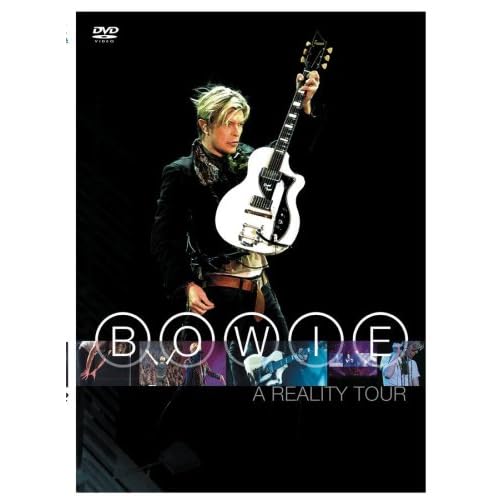 Recorded concerts on DVD are becoming increasingly common place. It almost seems at times that a band or artist releases a live DVD before they even have two albums under their belts. As it is, there are thousands of different releases on the market from just about any form of music you can think of. You need only to walk into a music store such as Real Groovy to see the prevalence of these videos.
The idea of a live DVD seems pretty straight forward; a video recording of a band or artists performance at a concert. One would expect that the goal of such a recording would be to recreate the live environment and the feelings an audience member would experience by being there, which suggests that restraint would be employed in the stylistic use of visuals; the performance should be enough to hold the viewer - that's the idea behind a concert after all, right? Also, in reality a concert is a collection of songs with (sometimes) banter from the artist(s) in between; must a live DVD adhere to this system. So, if we were to ignore the argument that it's impossible to consider any of these DVDs as anything but a remediation of the original concert, is it possible to deviate from this focused arrangement while still retaining the implied sense of realism and the feeling of 'being there'?
It is true that there are plenty of live DVDs that do ascribe to that simplistic formula (such as the David Bowie 'Reality Tour' DVD pictured above),
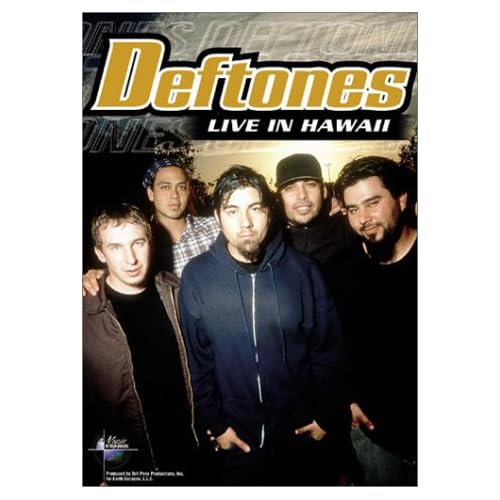 however it's also true that many don't. One of the most significant things that is done is the breaking up of a concert with additional footage (such as interviews and so on) and by result breaking the flow of the show. A good example of this would be the Deftones 'Live in Hawaii' which uses a combination of interview and 'home video' footage from the band themselves spliced in between every song to break the flow. For this particular DVD, this result is seemingly intentional as the concert footage is not all of the same performance and breaking up the songs is advantageous to the sense of continuity, but it does not help the cause of 'being thereness' to coin a phrase. Both of these symptoms, the performance footage from multiple venues and the interspersed separate footage, make this 'live DVD' something other than the defined idealised package of simplicity. This DVD is not alone in both its use of multiple locations or its use of additional footage; Michael Bublé's 'Come Fly With Me' does both of these things in a similar fashion to give just one example.
Editing of the concert footage itself can greatly change the feel of the concert and affect the realness of it. Usually there are a significant number of cameras recording the performance
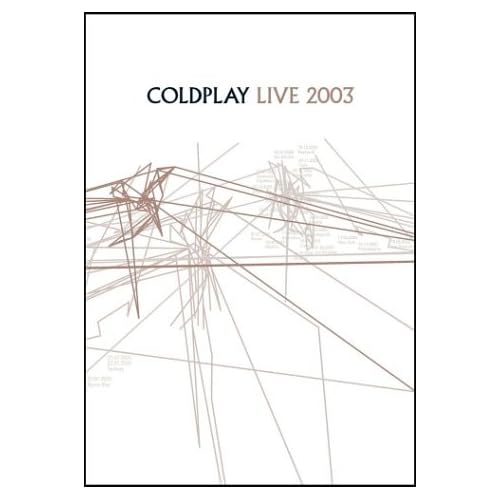 (Rammstein's 'Live Aus Berlin' had six cameras rolling at any given stage) so the editors have a considerable amount of scope in shaping the visual representation. Coldplay's 'Live 2003' has many angles that at times the editor cuts around with a lightning pace that could I feel easily be argued as providing an artificial feel to the footage; more in line with watching a music video than going to a concert. On the subject of visual subjectivity, the Coldyplay DVD manipulates the representation of the band in another way, by at times changing the hue of the images in post. A concert for a big band like Coldplay usually has an elaborate lighting rig that provides a multitude of colours and resulting moods, however in my experience I have yet to see a light setup that will make things appear sepia in colour and saturation. This again I feel significantly reduces the 'being thereness' and like with the editing, gives the impression of a remediated music video rather than a realistic concert.
To give one last example of possible foils to the reality ideal as used by live music DVDs, some concert videos do not provide the complete set that the artist(s) performed.
 The G3 'Live in Denver' DVD does just this; it's a recording of the concert of three artists (Joe Satriani, Steve Vai and Yngwie Malmsteen) that, no doubt due to the capacity limits of a DVD, only provides a small number of songs from each artist. This temporal manipulation can not be seen as consistent with realness; if you'd been at the concert you would have been able to see all of the songs in the set without having an outside source dictate which were available (ignoring that the artists themselves are doing just that with their set-listing).
Vote For The Worst
American Idol is touted as the "search for a superstar," with the public getting to create a popstar through a rigourous process of elimination. Since its inception, the shows producers has been accused of rigging the competition in favour of one contestant, usually to achieve the most politically correct outcome. This comes in the form of supposed voting tampering, and favoritism from the shows judging panel. Like any system accused of dishonesty, American Idol has garnered itself an audience intent on destroying the credibility of the show, and their favoritism of particular types of contestants, by creating a voting block to propel the worst contestant into the finals. For American Idol, this comes in the form of www.VoteForTheWorst.com. According to the website, VoteForTheWorst exists because "American Idol is not about singing at all, it's about making good reality TV and enjoying the cheesy, guilty pleasure of watching bad singing." The theory behind it is that because the producers will let untalented singers make the final cut over more talented, but less entertaining singers, in order to "keep America entertained." Fanatics will deride this movement as ungrateful people trying to destroy the one chance America has to create the ultimate popstar, but it can be argued that any popstar can only achieve fame from the support of the American public. It can also be argued that the amount of interference from the producers with the image and personality of the contestants (the transformation of Clay Aiken, for example) is on par with the actions of the producers of the Christina Aguilera's and Britney Spear's of the world. American Idol does not give Americans the opportunity to create a star. Through VoteForTheWorst, it gives them the opportunity to end the career of a manufactured popstar before they even achieve fame, by supporting the least likely, least politically correct contestant.
Subscribe to:
Posts (Atom)